Choose a role that fits your experience and availability: local coordination, hospital preparedness, legal liaison or member support. Include your practice location and zone so the committee can consider where you can contribute. A joining request starts a review; it does not assign a duty shift.
Is committee interest the same as emergency-call enrolment?
They are separate steps. Use member sign-up for mobile verification and your emergency-contact account. The committee interest form explains the role you would like to undertake.
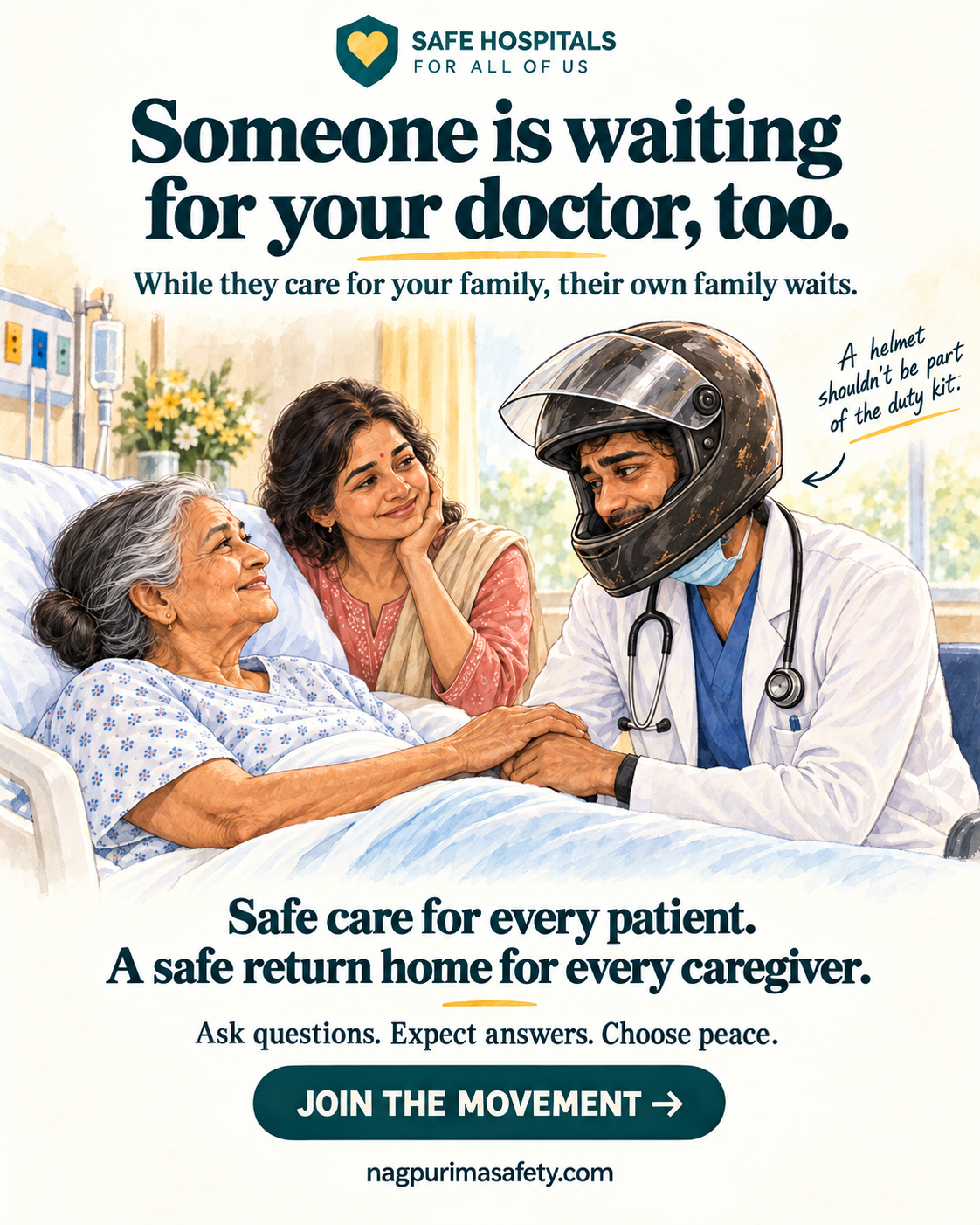
A hospital-safety campaign the whole community can join
Doctor safety concerns patients, nurses, reception teams, attendants and hospital owners. Use the campaign to start a conversation about respectful behaviour, safe access to care and clear ways to raise concerns. A useful display pairs the message with the hospital’s own help desk and complaint contact.
Where can a hospital use these messages?
Consider waiting areas, staff induction and community meetings. Keep emergency directions and patient information readable, and preserve the credits and context supplied with each poster.
Nagpur’s rapid action groups have been reported as networks where doctors alert nearby colleagues when a hospital faces violence or intimidation. The committee gives this effort a place in IMA Nagpur’s published structure.
The May 2026 bulletin lists Central, North, East and West Nagpur. South Nagpur also appears in the 2025–26 roster. Registered IMA members from every zone can register their interest here.
For joining enquiries only. This form does not dispatch emergency assistance.
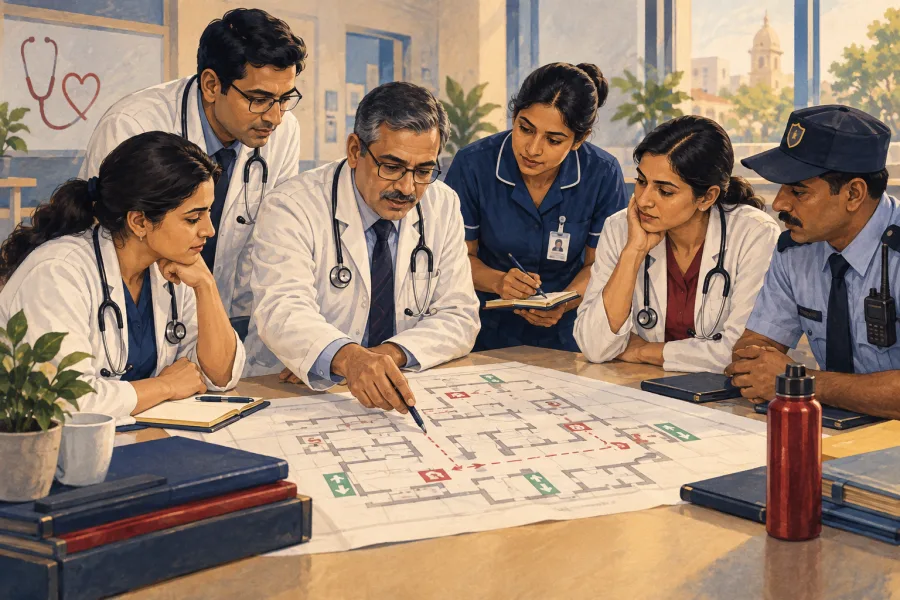
Coordination needs more than a directory of phone numbers. Each participating hospital should identify its entrance, local contact, reporting lead and agreed backup. Members need to know whom to notify, who can acknowledge an alert and how an incident will be followed up.
Does a published zone roster guarantee someone is on duty?
No. Published committee information provides background. Current availability, recipient permission and primary and backup coverage must be agreed separately before relying on a response arrangement.
These examples inform the proposed Nagpur workflow: verified members, local coordinators, hospital entrance maps, responder acknowledgements and incident follow-up. Sources and dates are included for each example.
Compare programmes by what happens after an alert: who receives it, how they acknowledge it, who contacts police and who supports the affected team. A model from another city can help structure a discussion, but local staffing, hospital layout and responsibilities determine the Nagpur plan.
What should a first practice session cover?
Use a clearly announced drill to check the contact chain, location instructions, handover and backup arrangements. Record gaps and assign a person to resolve each one before another exercise.
A safe healthcare workplace allows medical teams to care for patients without threats or intimidation. This campaign brings together evidence, public voices and practical actions: respectful communication, clear complaint routes and hospital preparedness. Supporting staff safety also means taking patient concerns seriously.
How can someone support the campaign today?
Share a source-checked article, discuss a poster with your team or help improve a local safety procedure. Keep allegations attributed, avoid identifying patients and direct unresolved complaints to the appropriate review channel.
Our purpose · Civic responsibility and public trust
+
A purpose of this project
Build respect. Restore trust.
Promote civic responsibility, responsible media reporting and a better public understanding of healthcare, so doctors can work safely and patients can seek care with confidence.
Responsibility in public life
Respect healthcare workers, follow reasonable safety rules and use lawful complaint channels. Anger, grief or a disputed bill never justifies threats, assault or damage to a hospital.
Fair and accurate reporting
Challenge misleading portrayals and unverified accusations about doctors. Encourage journalists and social-media creators to verify facts, seek responses, distinguish allegations from findings and protect patient privacy.
Clear expectations about care
Explain treatment choices, uncertainty, costs and scheme benefits in plain language. Support informed questions and fair complaint review, alongside dignity and safety for the people providing care.
Respect for medical professionals and fair treatment of patients belong together. Explain delays, treatment uncertainty and available services without making promises the hospital cannot meet. Encourage families to ask questions through a named contact, and encourage public discussion that separates verified facts from rumour.
What can a hospital explain before a dispute escalates?
Make it easy to find the treating team’s communication process, billing help, scheme desk and grievance officer. Give the family a clear next step and a reasonable update time.
Understand the difference between ABHA and an Ayushman card, cashless hospital care, Maharashtra’s scheme, the 70-plus benefit and your right to raise a complaint.
Clear information protects patients’ entitlements and helps prevent disputes.
Clear answers about Ayushman Bharat in Maharashtra
Families often arrive with questions about their card, the hospital’s participation and the treatment package. Our guide explains how to check these separately, how Maharashtra’s MJPJAY relates to PM-JAY, and where to seek help when information conflicts. A general scheme description cannot settle an individual admission.
What should a family ask the hospital scheme desk?
Ask which scheme and package apply, whether the hospital is authorised for that treatment, what approval is needed and how any proposed charge is explained. Request a complaint reference if the issue remains unresolved.
Read workplace-violence statistics with their context
Different studies count different experiences: verbal threats, physical assault, incidents in one year or events over a career. Sample size, setting and reporting methods affect what a finding can tell us. The facts page includes these details so readers can discuss doctor safety without presenting an old survey as a current national total.
How should a statistic be used in a presentation?
Keep the study date, respondent count and measured period beside the percentage. Link the original research and state its limits, especially when a study covers only one hospital.
Hospital security planning from policy to practice
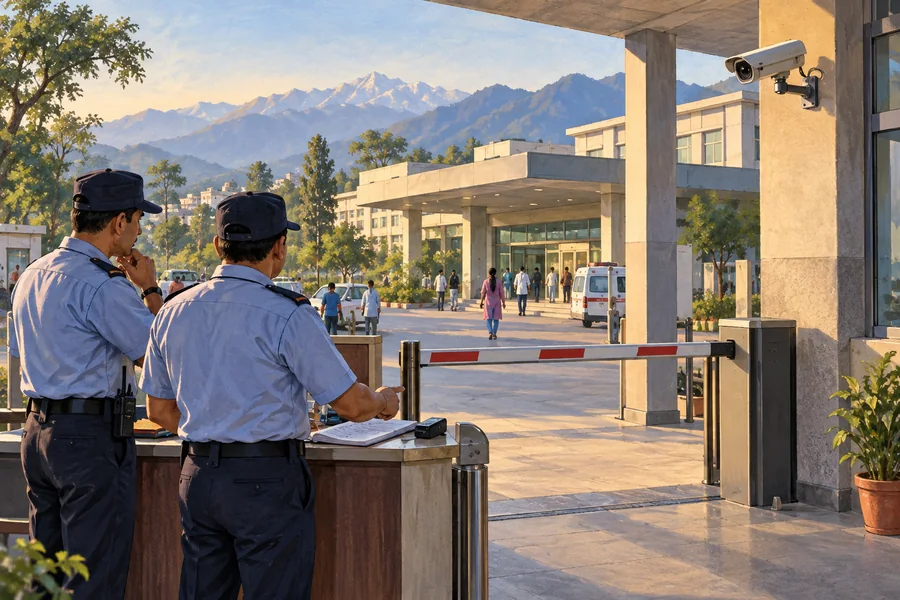
Use the nine preparedness topics to review entrances, emergency areas, control-room communication and staff support. Each topic identifies practical actions, a responsible lead and a way to check progress. A short review with clinical, nursing, administrative and security staff can identify where responsibilities are unclear.
Where should a hospital begin?
Start with the places and shifts where staff report the greatest difficulty. Agree one achievable improvement, an owner and a review date; then test whether the change works during normal hospital activity.
Security applicants can describe their training, experience, preferred work area and availability. Hospital security calls for calm communication, visitor guidance, safe access management and prompt escalation. Recruitment should match the person’s training to the actual post, with a named supervisor and relief arrangements.
Does submitting the form confirm a job or a monthly salary?
No. Selection, the legal employer, pay, working hours, benefits and duty location require a separate written agreement. The free website does not make security staffing free or create an employment offer.
The presentation introduces the purpose, member journey and emergency-coordination workflow. The one-page summary is suited to a short briefing or an introduction to a hospital administrator. Use both to discuss responsibilities, participation and the difference between a working website feature and an operational response team.
Is the web app free for IMA members?
The project is offered free of charge to members and can be installed on a phone. Actual staffing arrangements and hospital duties must still be agreed. Read the current service information before planning a group exercise.
Practical ways to support colleagues between incidents
Regular participation can include a contact-list review, a hospital walk-through, an awareness discussion or a planned drill. Choose an activity with a clear purpose and a manageable time commitment. Document what was learned so a future coordinator can continue the work.
Can members help without taking an emergency-response role?
Yes. Sharing accurate resources, helping a hospital check its public details and supporting training are useful contributions. Each activity has its own participation requirements and should fit the member’s availability.
A hospital incident can raise separate needs: police liaison, legal advice, insurance notification, communication and staff wellbeing. This resource collection helps members find a starting point for each. Prepare a brief factual timeline and keep confidential clinical records out of public messages.
Which resource should be used first?
Choose by the immediate need. An active threat requires emergency services; a policy question may need a legal or indemnity adviser; distress after an incident may call for professional wellbeing support.
The legal guide distinguishes violence against healthcare workers from complaints about medical care. It links relevant Indian and Maharashtra sources and explains why a headline or courtroom observation is not a complete statement of the law. Keep the incident facts and the applicable legal provision separate when seeking advice.
Does a non-bailable offence mean bail is impossible?
No. Bail is a judicial decision under the applicable law and case circumstances. Use the linked legal sources and obtain case-specific advice before treating a media caption as a rule for every incident.
The 2025 private member’s proposal seeks nationwide protection against healthcare violence. Read its proposed penalties, tracked status and how it differs from existing protections.
Report a past hospital assault for committee follow-up
The private incident form helps IMA understand what happened, what action was taken and what support is still needed. Give a clear date or approximate period, hospital location, factual account and available complaint references. Distinguish what you witnessed from information received from others.
Does this report replace a police complaint or an SOS?
No. It is for committee review of past incidents. Use the emergency route for an immediate threat and the appropriate police process for a complaint. Avoid adding unnecessary patient identifiers to your account.
The directories bring public contact and location information together for easier discovery. Search by a known name or area, then check the relevant entry before contacting a practice. Opening hours, available services and the right department may need confirmation directly with the establishment.
Is everyone listed an approved SOS recipient?
No. A public directory entry does not establish membership approval, consent to emergency calls or current duty availability. Emergency participation is managed through the separate member and committee processes.
General / multispecialityGovernment / medical collegeCancer centreSpecialist centre
Street-map tiles could not load. Hospital locations and the list remain available. Check your internet connection.
Zoom in to separate nearby hospitals. Select a numbered group to expand it.
Locations checked against published hospital directories, official hospital maps and OpenStreetMap. Pins indicate hospital sites or campuses; use Directions to check access. Map checked 8 September 2026.
A map is useful when a caller and a responding colleague describe the same location differently. Check the hospital name, street and practical entrance instructions in advance. For large sites, identify the relevant building or gate rather than relying only on a map pin.
Does the nearest map result mean help is available?
No. Distance does not establish staffing, eligibility, capacity or an accepted response. Confirm the receiving contact and agreed arrangements directly; use emergency services when immediate assistance is required.
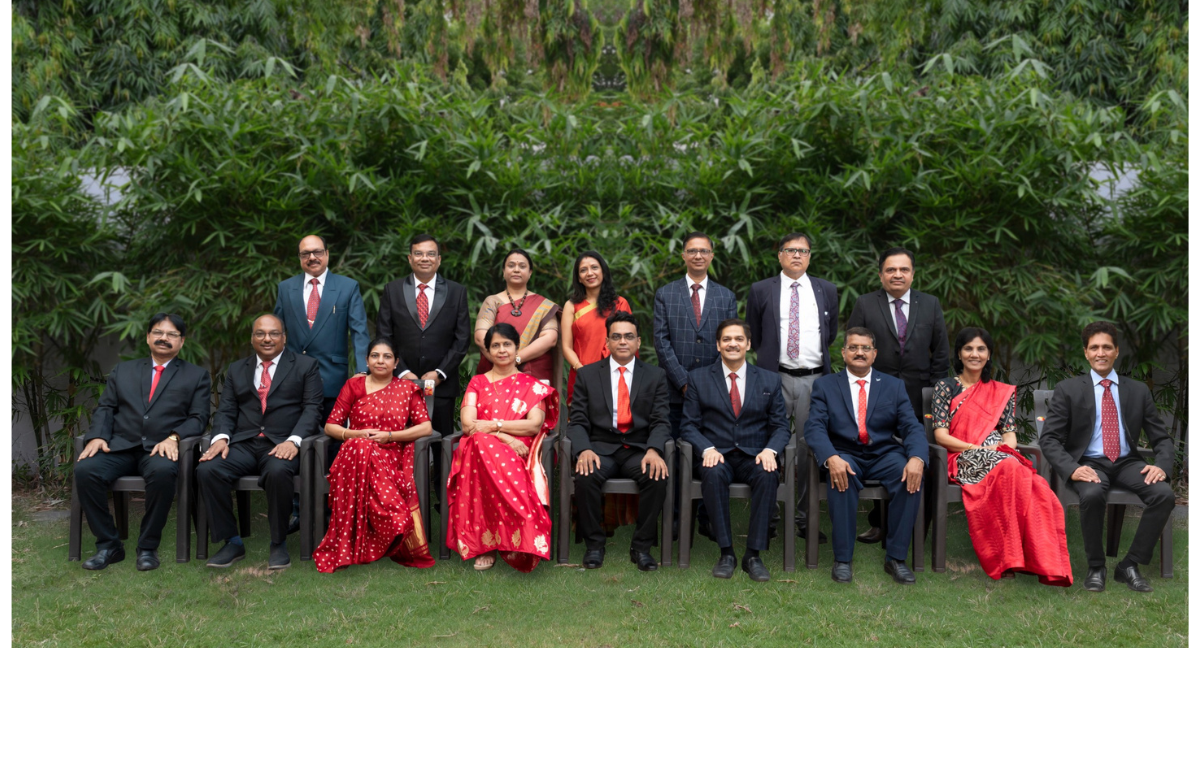
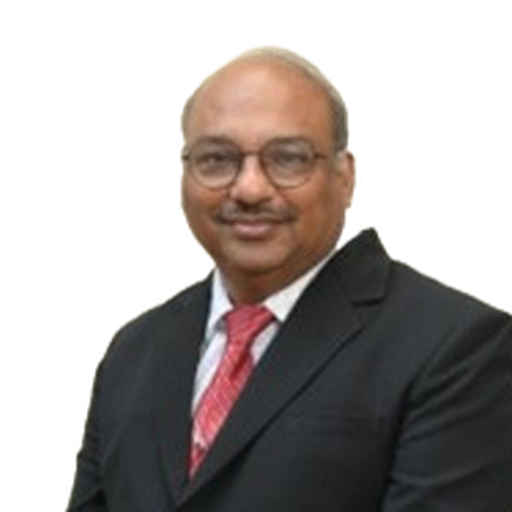
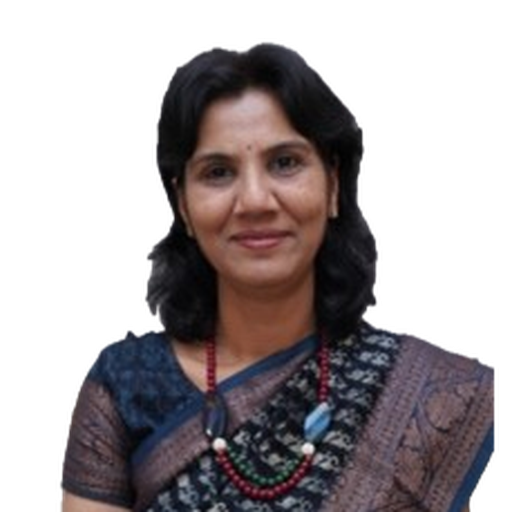
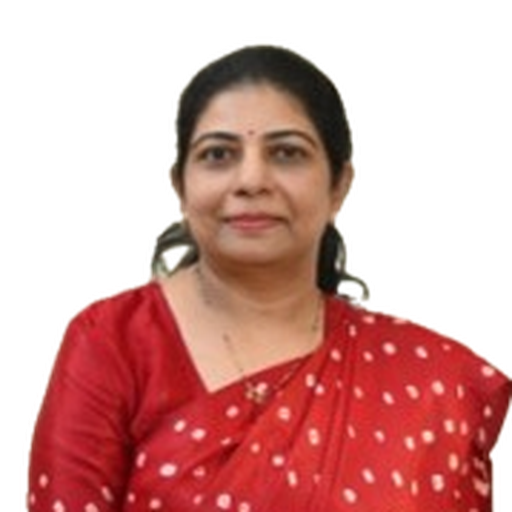
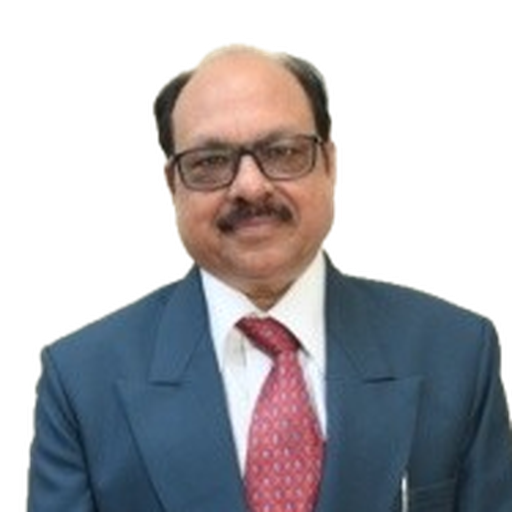
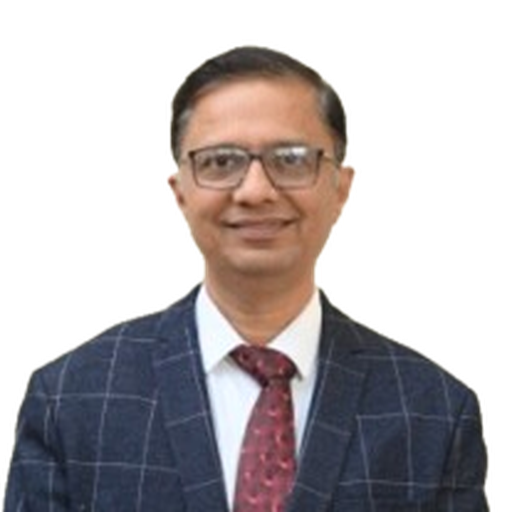
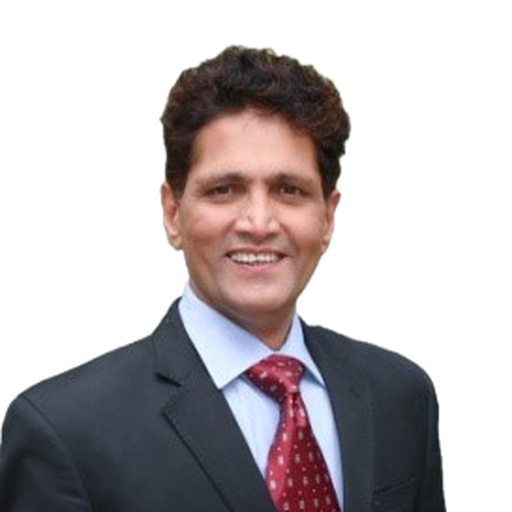
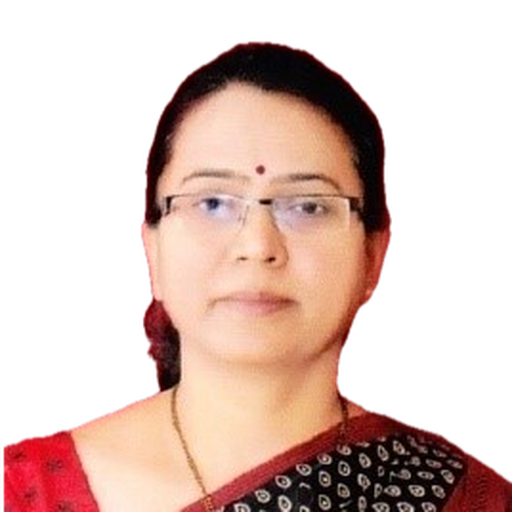
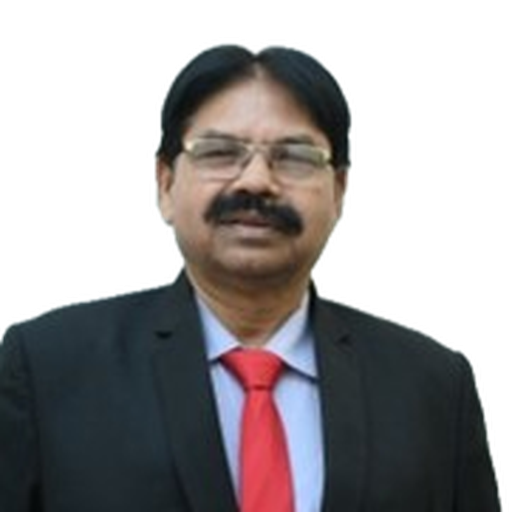
From IMA Nagpur’s official website. Select a photograph to enlarge it.
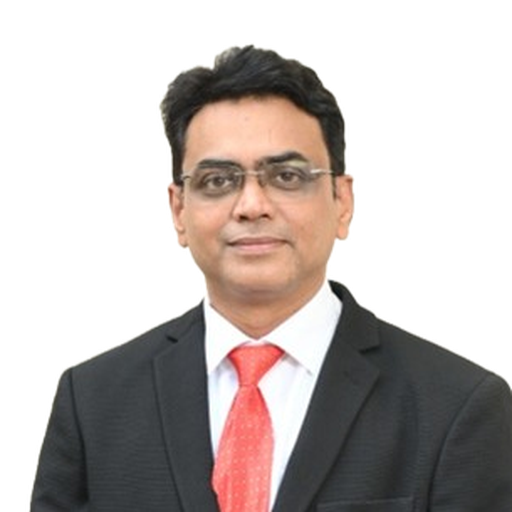
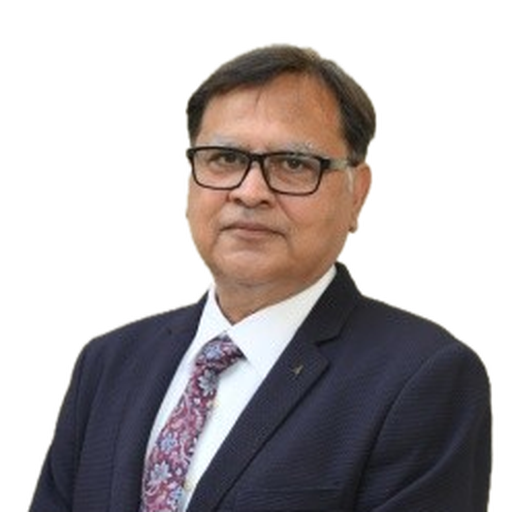
Dr. Gathe Sachin
President
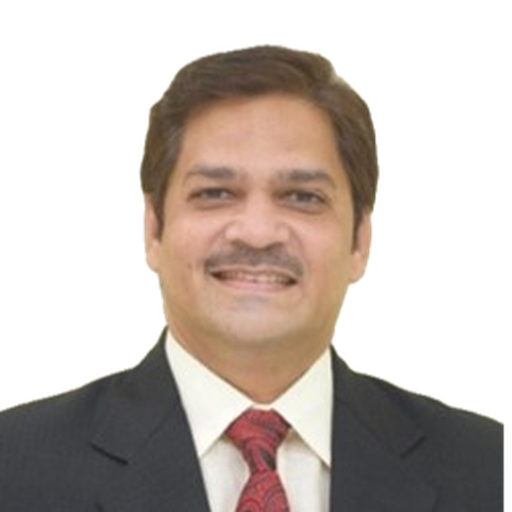
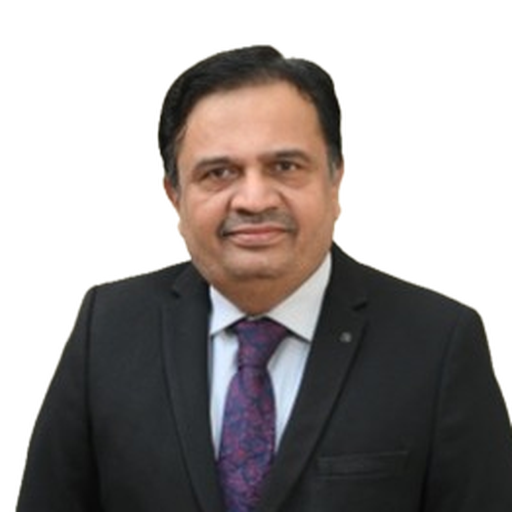
Dr. Sawarbandhe Rajesh
Imm. Past President
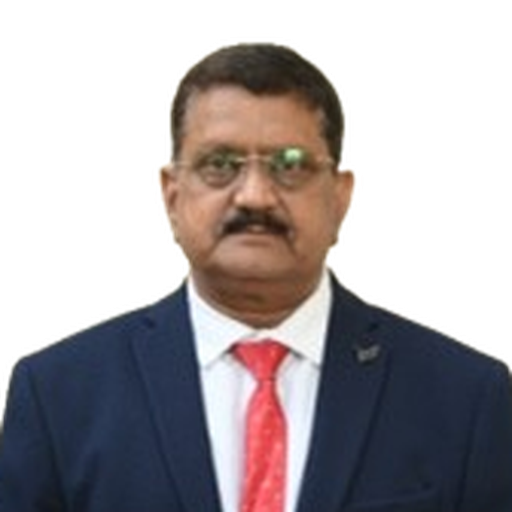
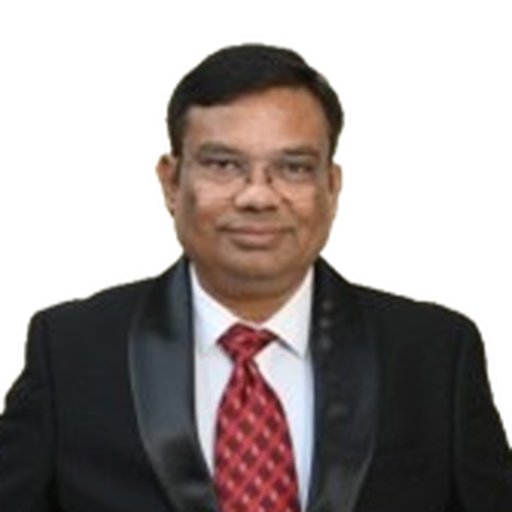
Dr. Aniruddha Deoke
President Elect.
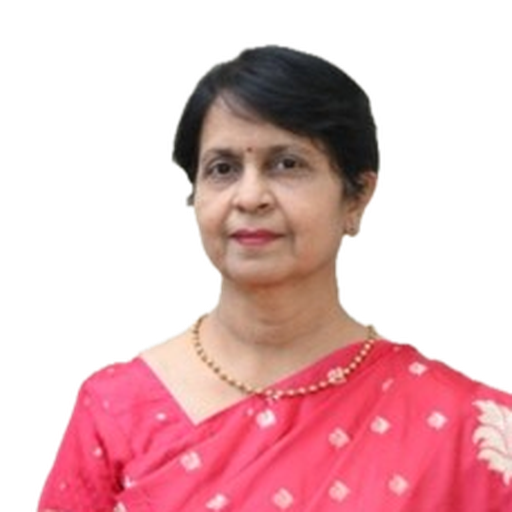
Dr. Anjali Bhandarkar
Hon. Secretary
Dr. Jitendra Sahu
Imm. Hom. Secretary
Dr. Manisha Rathi
Vice President
Dr. Prajakta Kaduskar
Vice President
Dr. Mukund Ganeriwal
Hon. Treasurer
Dr. Aditya Parihar
Hon. Jt. Secretary
Dr. Pallavi Alsi
Hon. Jt. Secretary
Dr. Deshpande Ajay
Chairman IMA AMS, Nagpur Chapter
Dr. Vairagade Shubhangi
Hon. Secretary IMA AMS Nagpur Chapter
Dr. Shankar Khobragade
Hon. Asst. Director of Studies IMA CGP, Nagpur Chapter
Dr. Sanjay Jain
Hon. Asst. Secretary of IMA CGP, Nagpur Chapter
Dr. Abhijeet Ambhaikar
Public Relation Officer
Dr. Sachin Makade
Coordinator
IMA House, activities and other website images 9 images +
IMA Nagpur logoIndian Medical Association emblemIMA Nagpur emblemIMA website header backgroundIMA House, NagpurCommunity healthcare activityActivities illustrationSchemes download iconE-bulletin illustration
Understand the association’s published leadership
Office-bearer information helps readers understand the association’s organisational context. Check the bulletin or source period alongside a name when preparing a formal communication. Membership enquiries, project participation and an incident needing follow-up may require different contacts.
Does a published office-bearer list establish emergency duty?
No. An association position is separate from an agreed response shift or approval responsibility in this application. Use the enquiry route to identify the appropriate contact for a non-urgent request.
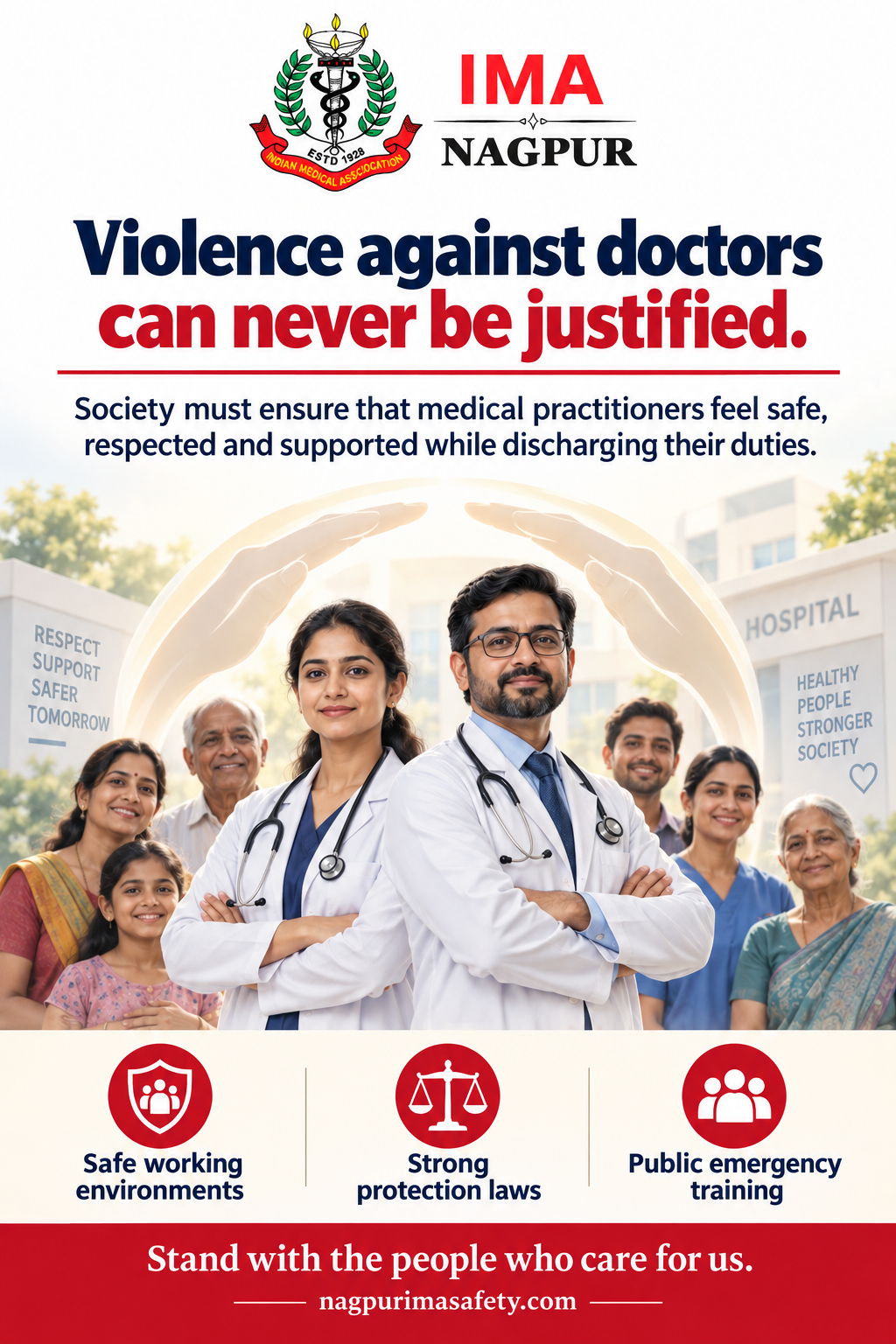
Society must ensure that medical practitioners feel safe, respected and supported while discharging their duties.
Indian Medical Association (IMA) Nagpur works to secure safe working environments for healthcare professionals, advocate for strict protection laws and conduct public emergency training.
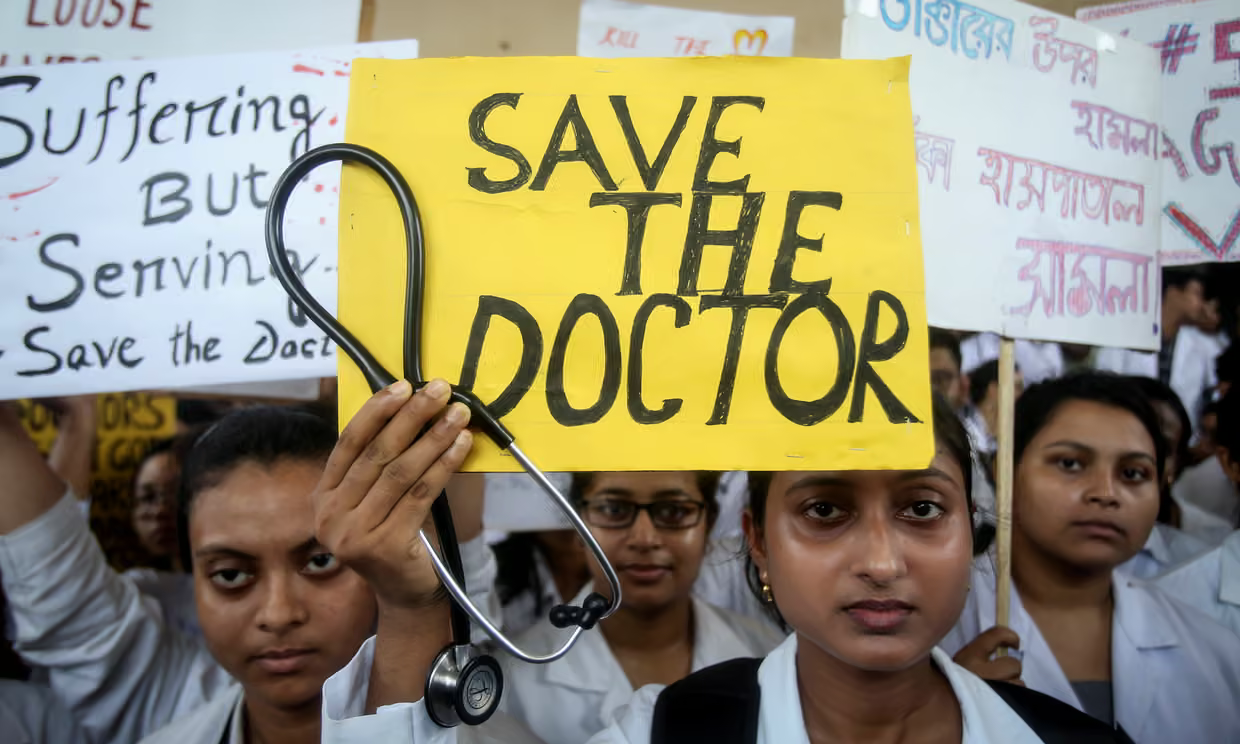
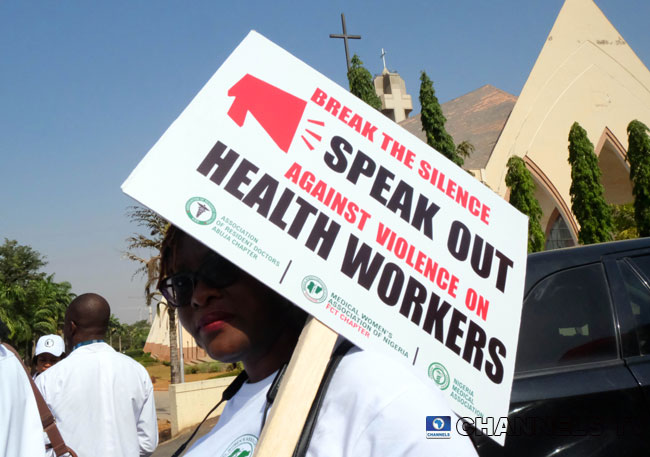
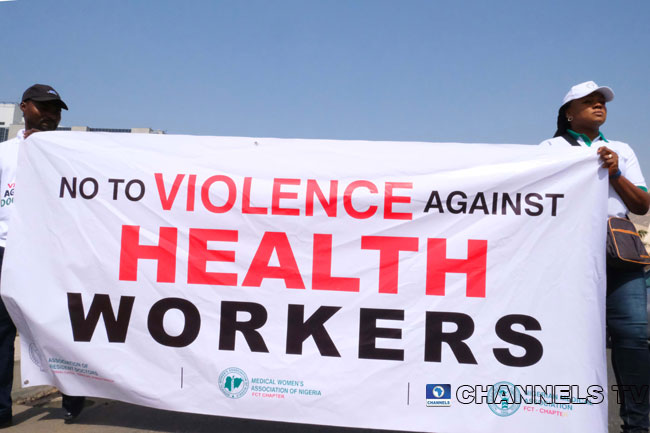
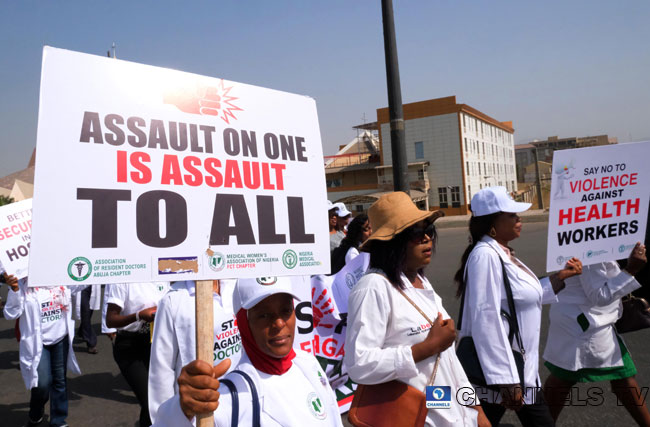
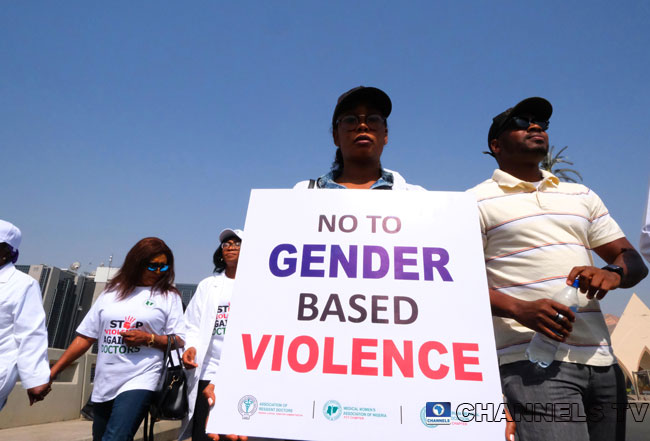
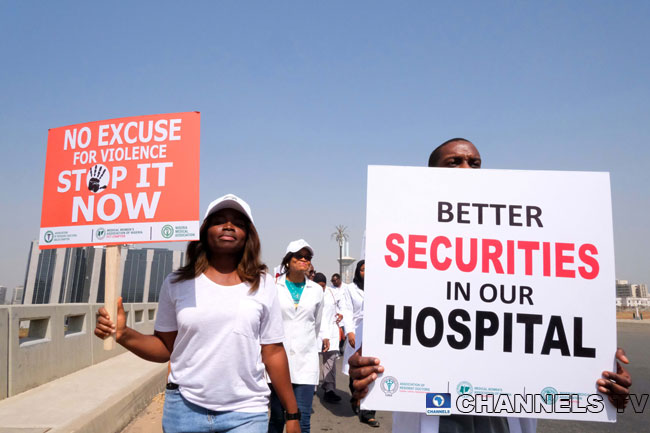
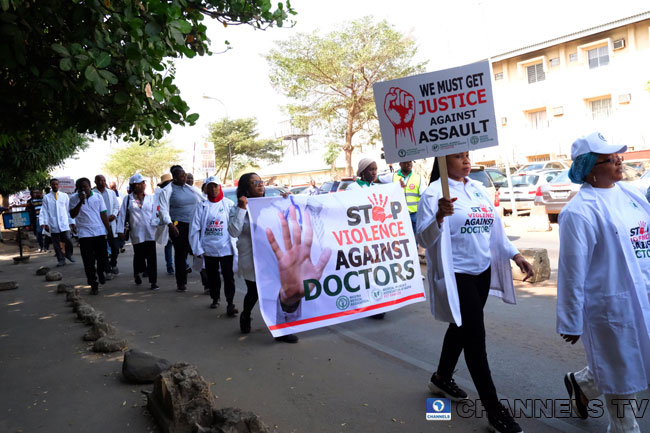
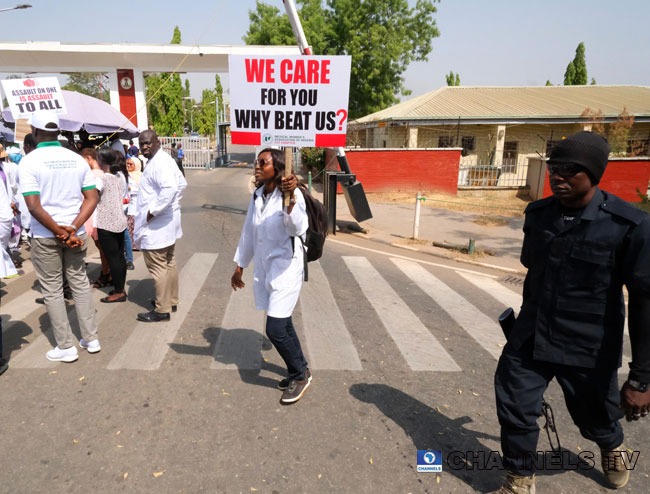
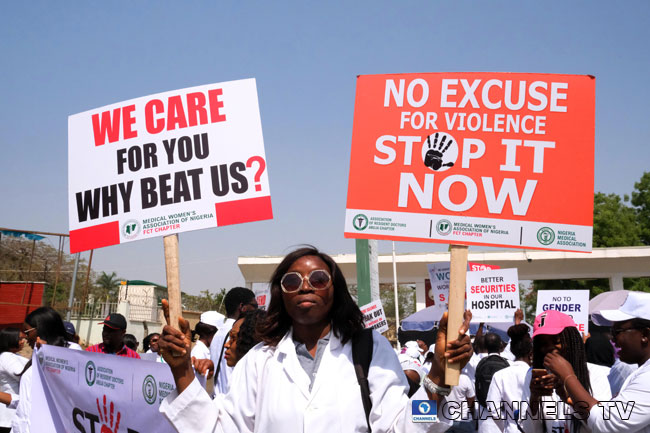
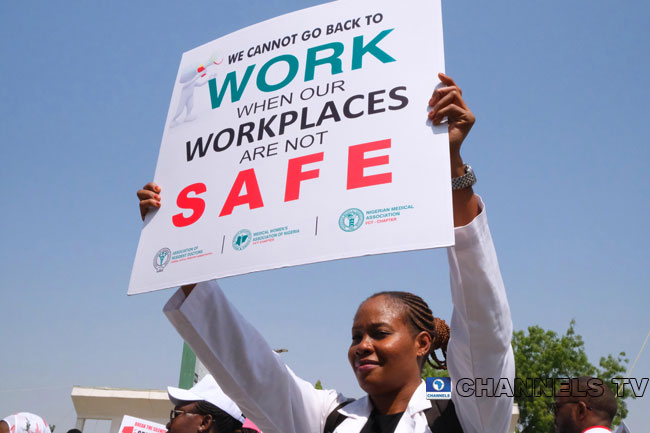
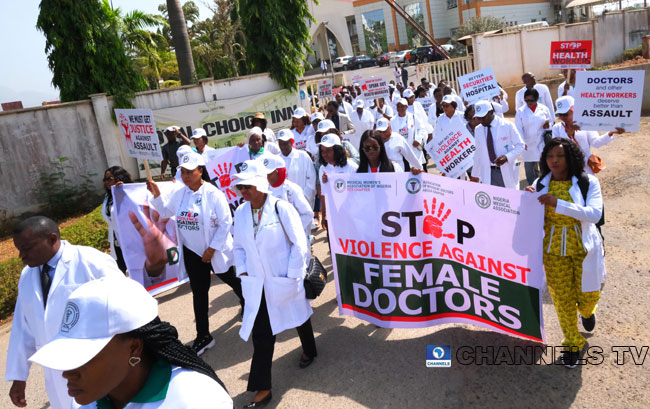
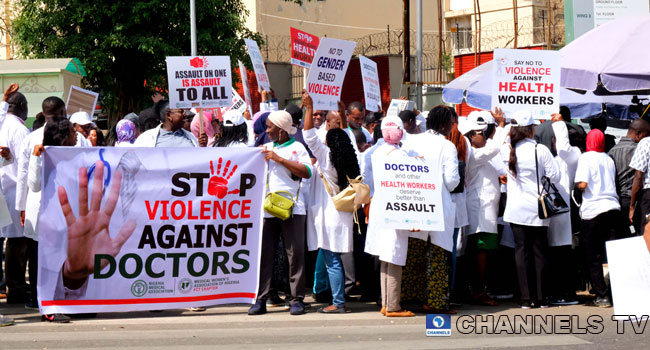
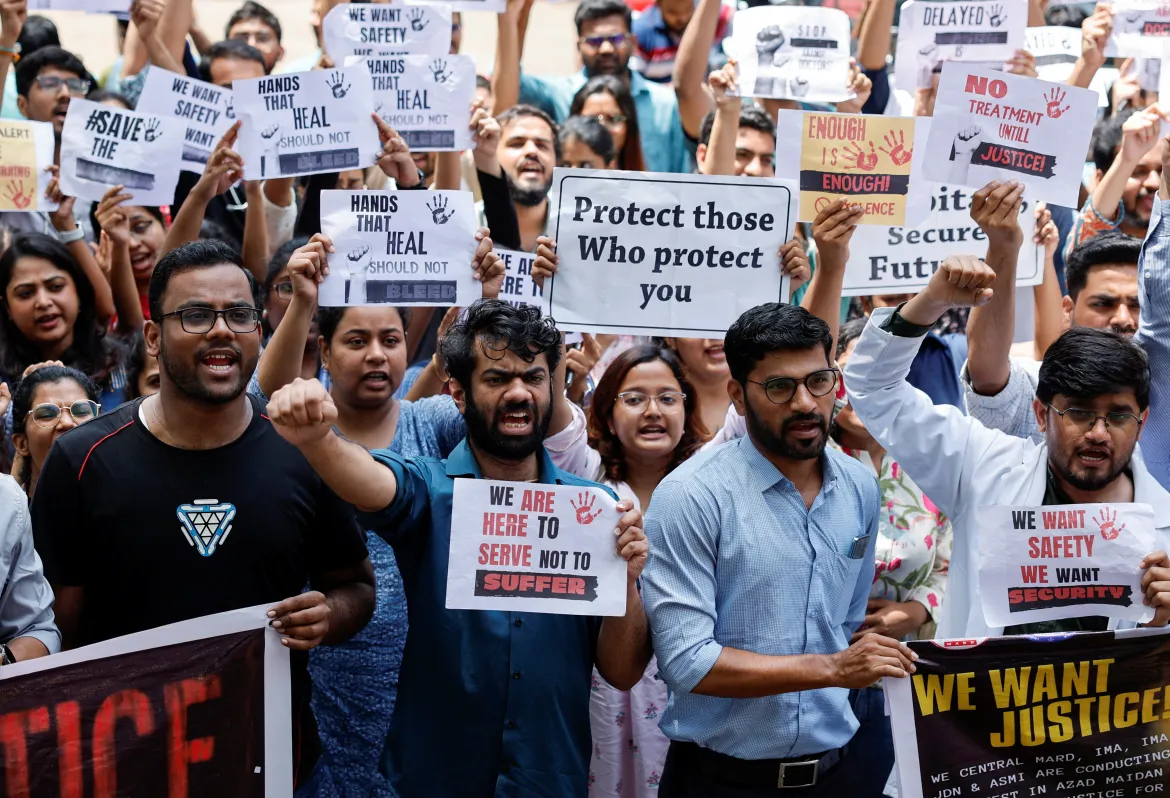
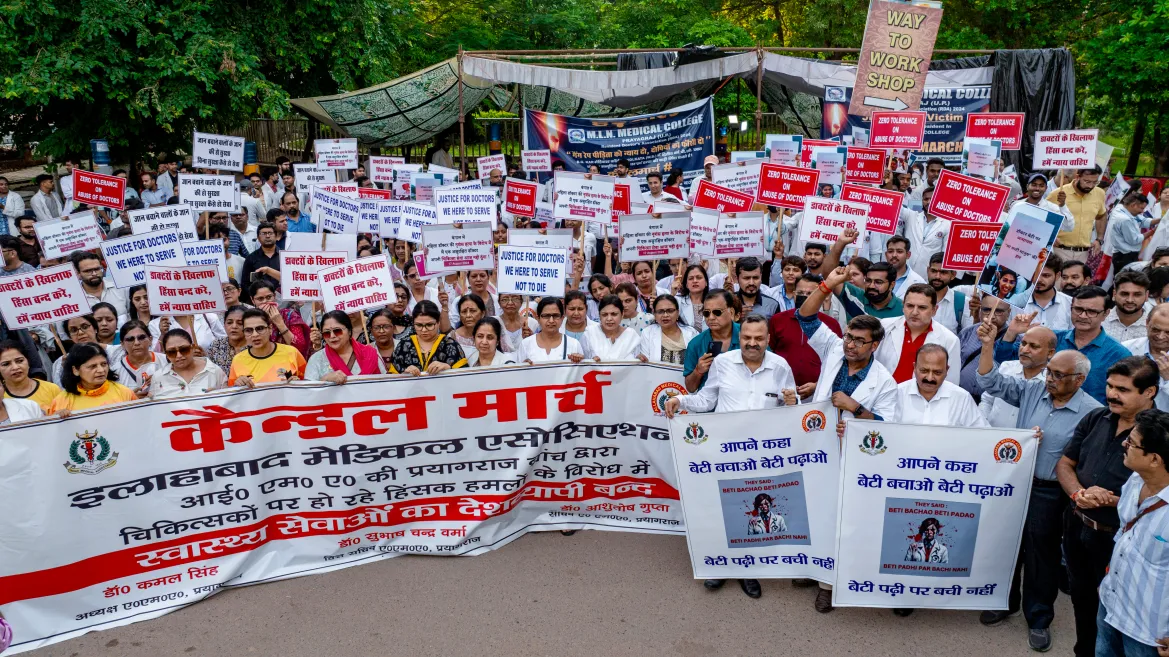
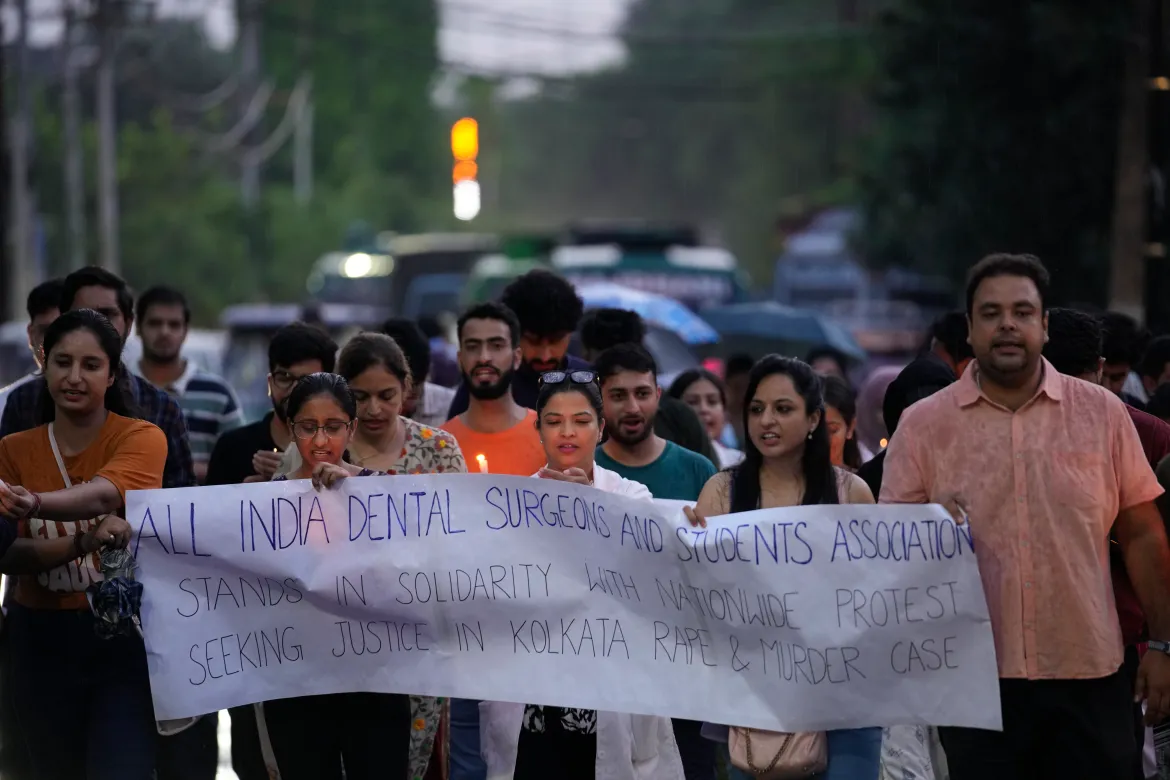
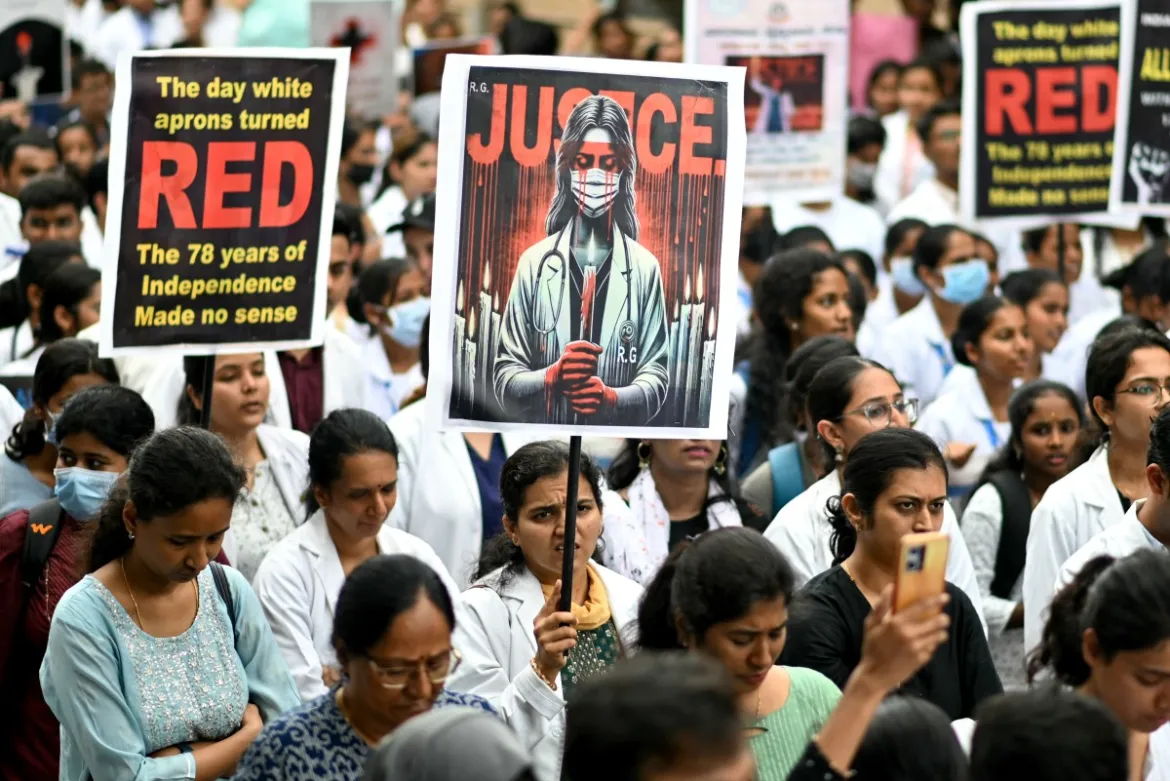
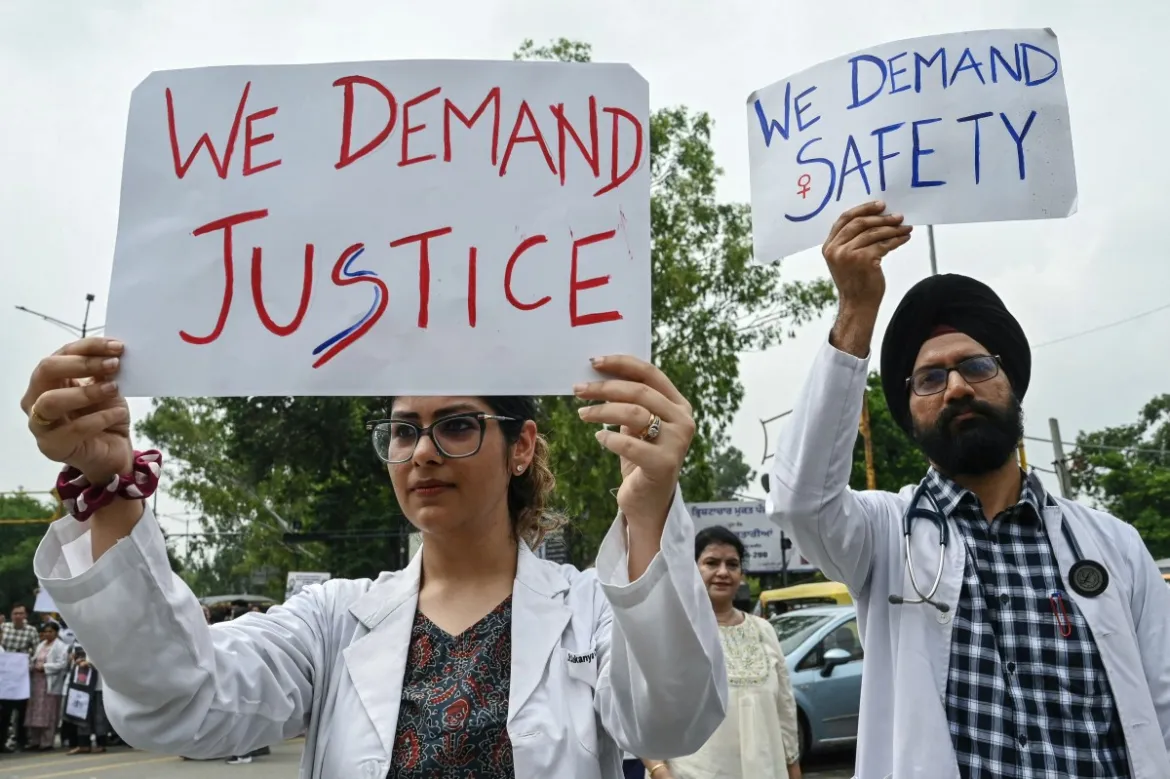
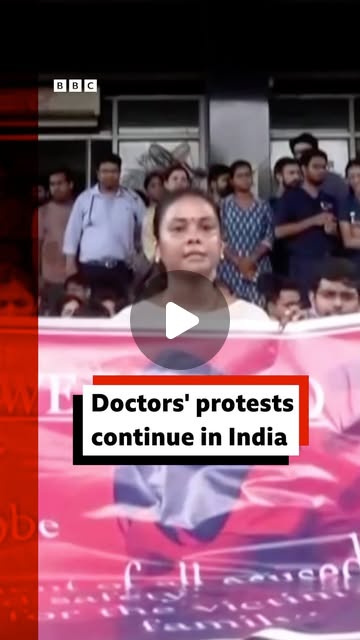
Supplied protest photographs showing calls for safety, dignity and support. They include campaigns beyond Nagpur; dates and locations have not been independently verified. Original watermarks and placards are preserved.
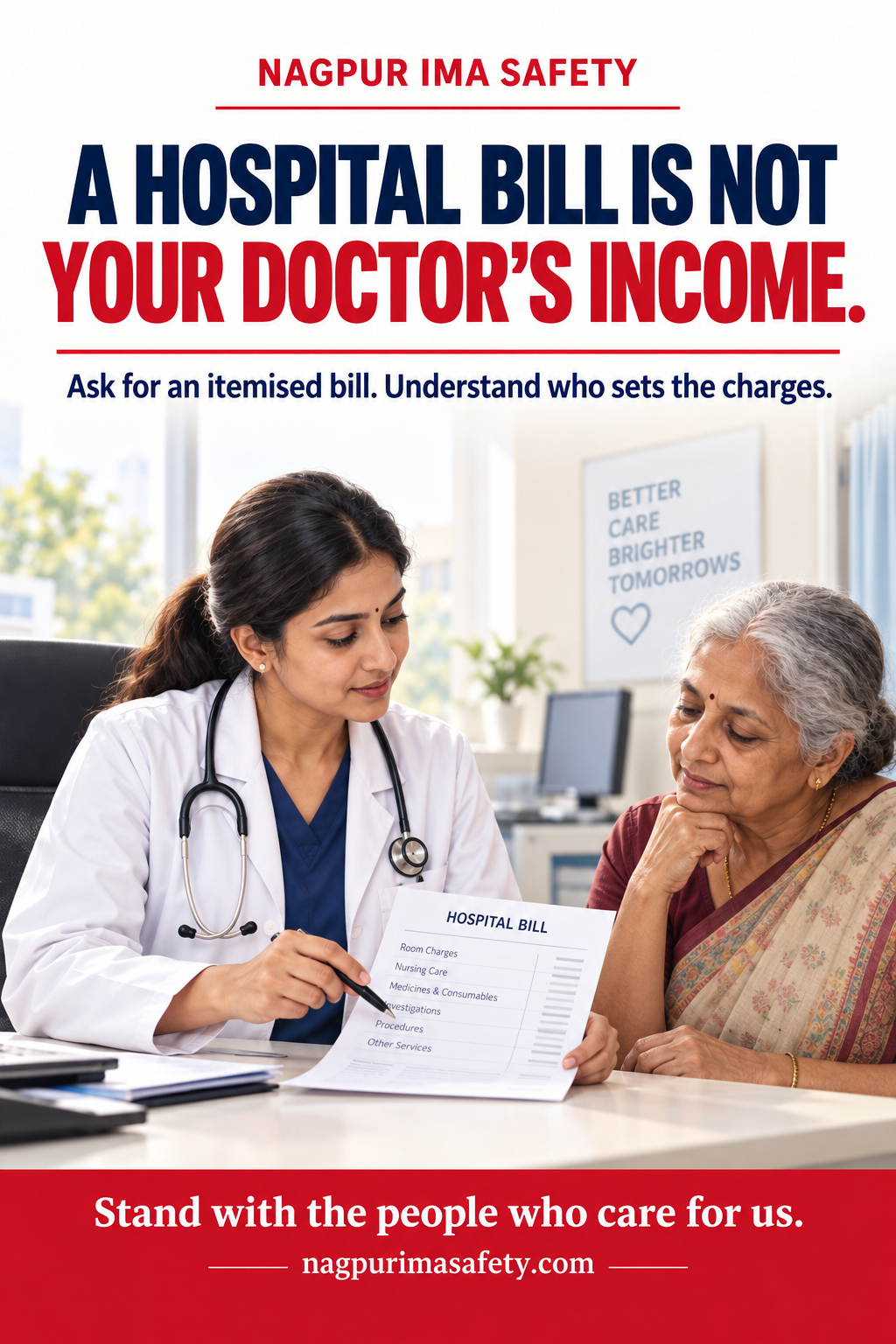
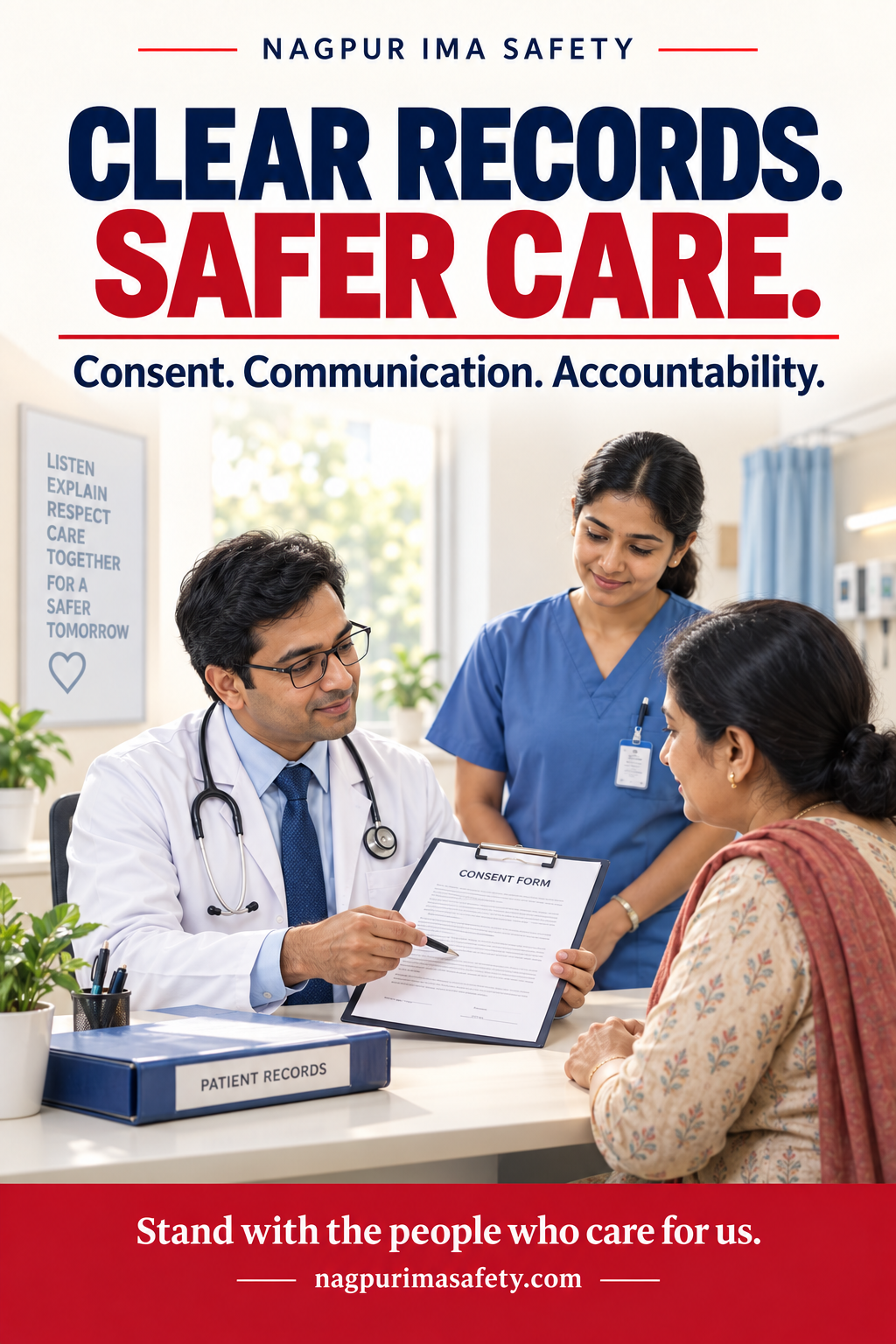
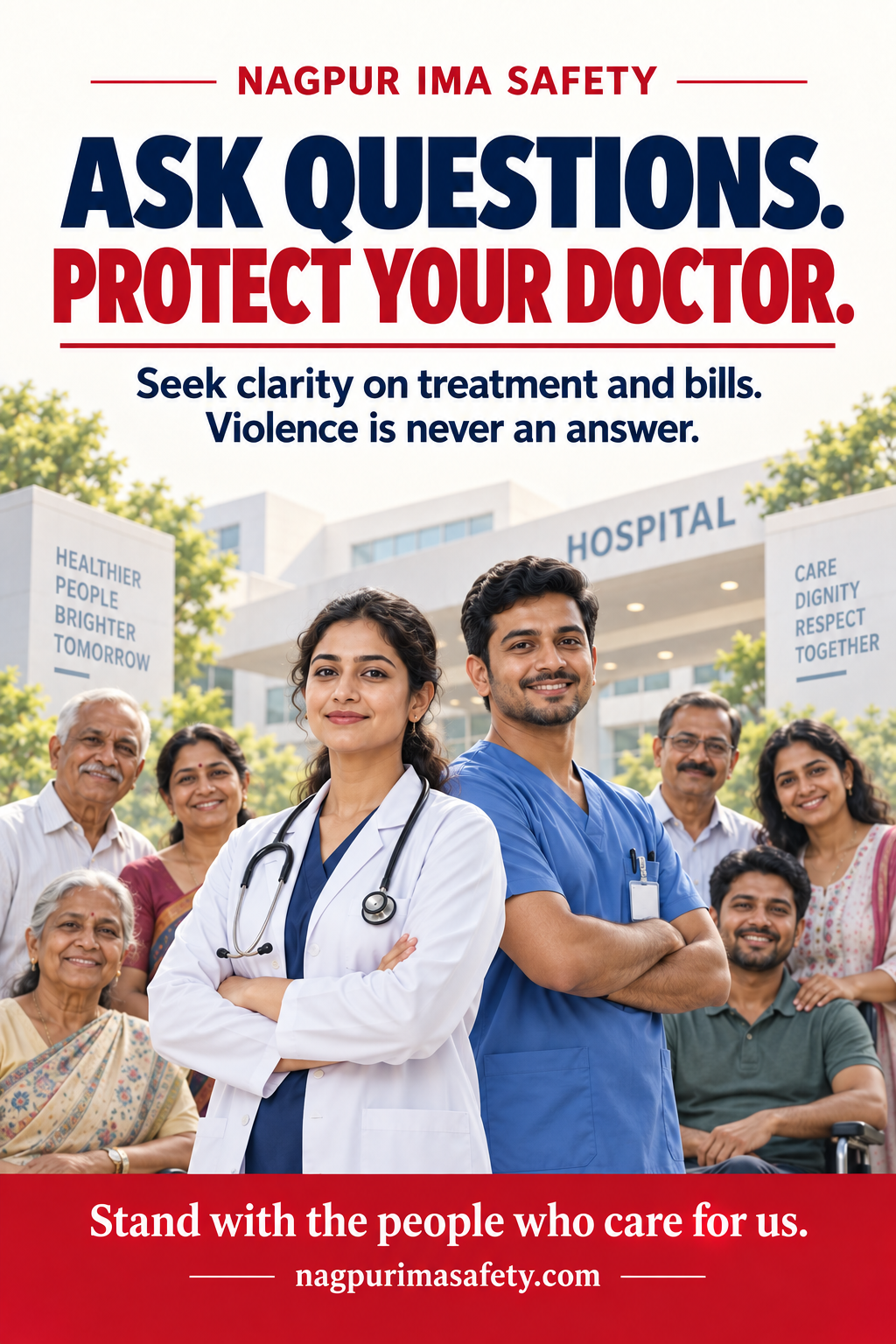
Doctor-safety posters for awareness and discussion
Browse campaign artwork and supplied protest photographs, enlarge an item to read it clearly, and retain its credit when sharing. Photographs may show events outside Nagpur or from earlier years. Use the accompanying context so a powerful image is not mistaken for evidence of a new local incident.
Can a poster explain the whole legal position?
A short message cannot cover every legal situation. Pair legal captions with the source guide, and distinguish a reported observation in one case from a general rule.
Explore attributed commentary, hospital practice and original reporting. The source list helps editors follow later developments and keep the campaign current.
Does a news report establish a finding against a person?
No. Keep the speaker, publication date, supporting record and legal status clear. Use the original court order to check the scope of a reported decision.
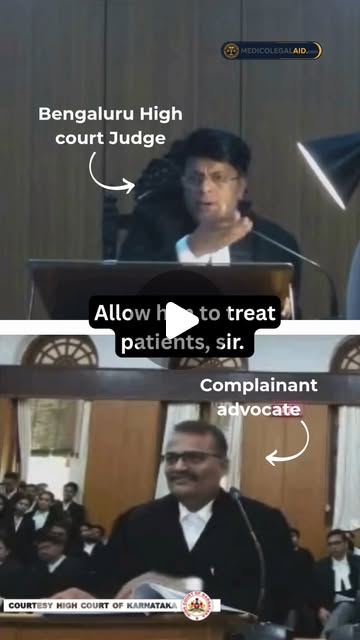
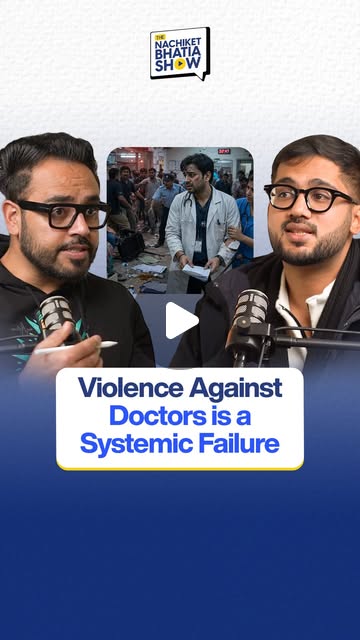
Dr Vinay Kumar discusses a Karnataka High Court case involving an oncologist and allegations of a forged experience certificate. Watch the original reel for his account and context.
Short videos about violence against healthcare workers
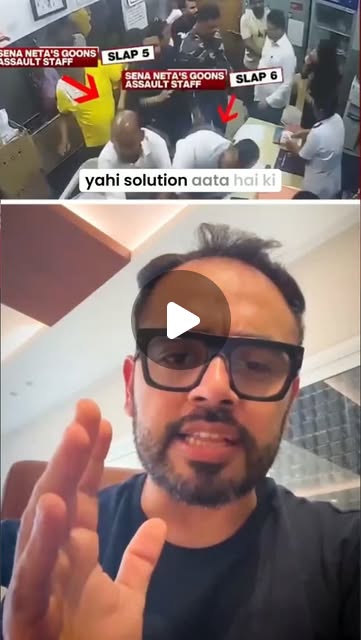
The reel collection provides an entry point to public discussions on staff safety, policy and medical practice. Check the creator, publication date and description before sharing. Open the original post to see the full caption and any later clarification.
Why might a reel need to open in Instagram?
Instagram can restrict embedded playback or require sign-in. Each item includes its original link. A short clip may omit context, so use the longer reading and legal resources when making a decision.
Explore 12 doctors discussing professional life, medical education, public trust and healthcare policy. Each profile identifies its focus so you can find the voices relevant to you.
Explore voices by topic
Doctor safety and representation
Start with conversations about professional conditions, healthcare policy and the concerns doctors raise collectively. Use the safety campaign resources to connect public discussion with local action.
Explore perspectives on disability access, discrimination and respectful medical education. A supportive hospital community should make room for colleagues with different experiences and needs.
Find discussions of scientific evidence, health myths and public communication. Follow the original research and full explanation behind a post before sharing its conclusion.
Hear about studying medicine, examinations and the transition into clinical work. These accounts offer personal perspectives; admissions and training requirements should be checked with the relevant institution.
Explore ways to explain sensitive health topics clearly and respectfully. These voices discuss reproductive health, patient questions and informed conversations about care.
Discover different communication styles, from medical humour to plain-language science and public health education. Use them as starting points for better conversations with your community.
Orthopaedic surgeon and medico-social advocate associated with FAIMA. A public voice on doctors’ working conditions, professional representation and medical policy.
Doctor and GMC Nagpur alumnus whose videos cover medical training, studying and working life. A local perspective for medical students and doctors beginning their careers.
Neurologist at Apollo Hospitals, Hyderabad. Shares public information on health, running and fitness, alongside his clinical interest in neurological conditions.
Doctor, author and educator known as Dr Cuterus. Explains sexual and reproductive health in accessible language, helping people ask informed questions about their bodies and healthcare.
Public understandingReproductive healthHealth literacy
Doctor, author and health educator who shares science-based explanations through social media and writing. Offers an international perspective on making health information easier to understand.
Health literacyScience communicationPublic education
Physician, medical educator and disability-rights advocate. His work focuses on accessible medical education, inclusion of doctors with disabilities and dignity within healthcare institutions.
Community medicine specialist and medical educator who writes about medical humanities, mental health and inclusion. Her public work explores dignity, discrimination and the experiences of people learning and working in medicine.
Medical ethicsInclusive medical educationMental health
Hepatologist and clinician-scientist who writes publicly as The Liver Doc. His research and commentary examine liver health, medicine and supplement safety, and the evidence behind health claims.
Health misinformationLiver researchScientific evidence
Orthopaedic surgeon and health educator discussing movement, fitness and everyday health myths. His public work also covers workplace ergonomics, fatigue and wellbeing, offering examples of how doctors can explain health topics in accessible language.
Health mythsWorkplace wellbeingPublic communication
Gynaecologist and founder of Maitri, a public education platform for women’s health. Her videos and articles explain topics including pregnancy, menstrual health and reproductive wellbeing in language intended for a broad audience.
Gastroenterologist and public educator who uses medical humour to discuss gut health and everyday habits. His videos and conversations offer examples of making health explanations approachable and engaging.
Independent public profiles; inclusion does not imply a committee appointment or endorsement of this project. Profiles checked 10 Sep 2026. Refer to original sources for current roles and the full context of any advice.
Follow medical voices with an informed approach
Doctors and medico-social creators can draw attention to working conditions, examinations, healthcare policy and public misconceptions. This directory helps readers find the original profile rather than a repost. Inclusion identifies a relevant public voice; it does not make the creator a project representative.
How should advice from a social-media creator be checked?
Look for the original document, date and scope behind a claim. Distinguish personal commentary from official guidance and seek qualified advice for an individual legal or clinical matter.
Healthcare-safety headlines and a shareable IMA campaign graphic. Updated each morning at 8 a.m. IST.
Loading the latest update…
A daily starting point for healthcare-safety reading
The daily feed brings together recent publisher headlines and a dated awareness graphic. Use the headline to find the original report, check what is alleged or confirmed, and consider whether a lesson applies to your workplace. Automated collection is a discovery tool, not a finding about an incident.
What if today’s update is unavailable?
Check the date on the displayed collection and use the curated reports below. An older update remains background reading; its presence does not mean a fresh incident has occurred today.
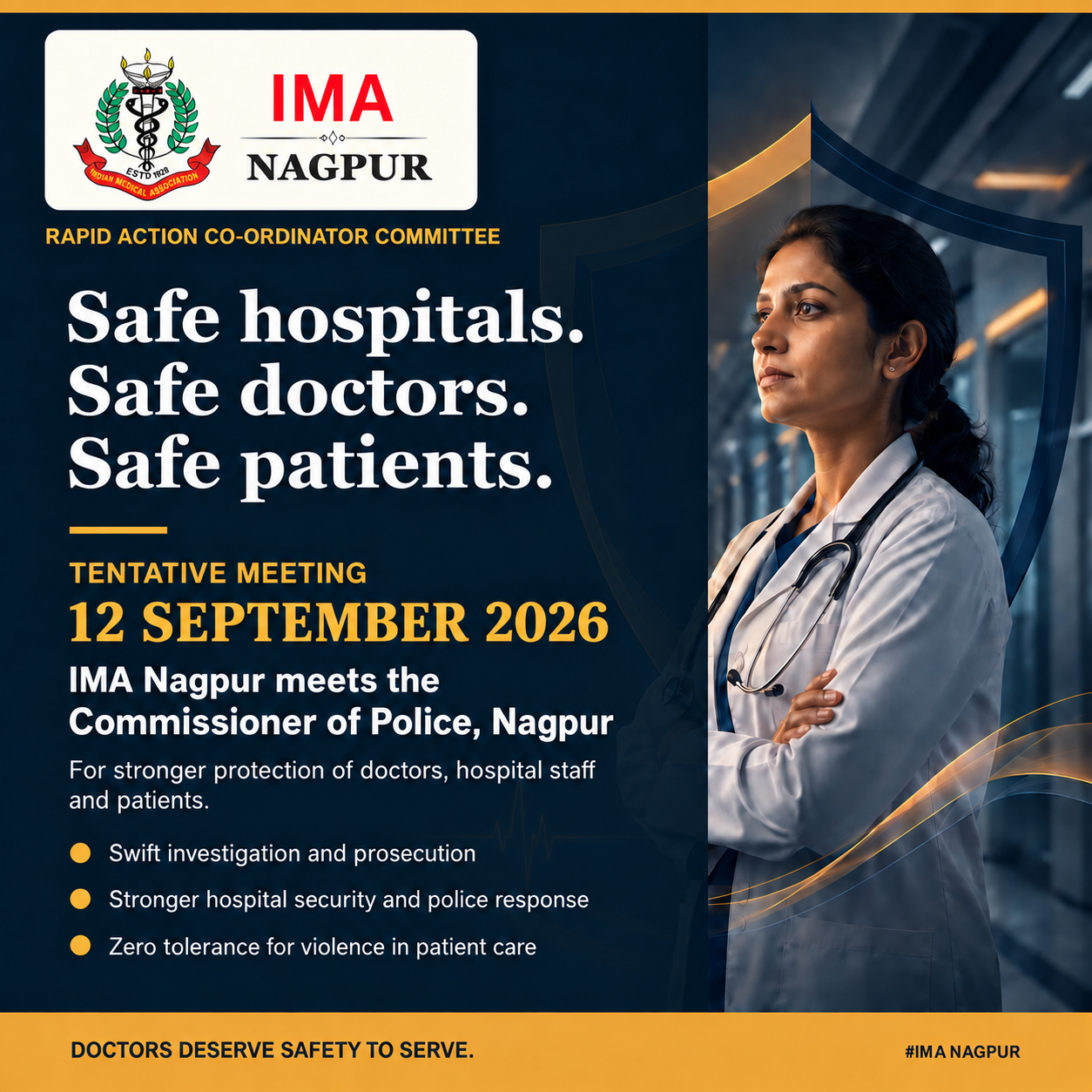
Tentative meeting for 12 September 2026. IMA Nagpur plans to meet the Commissioner of Police, Nagpur, to seek stronger protection for doctors, hospital staff and patients.
Tentative meeting: 12 September 2026. IMA Nagpur meets the Commissioner of Police, Nagpur, for stronger protection of doctors, hospital staff and patients.
Prepare a practical hospital-safety representation
A useful representation identifies the problem, the requested action and a contact for follow-up. Hospital teams can bring factual incident summaries, concerns about access or communication, and proposed coordination arrangements. Keep confidential case material in the appropriate official channel.
Is the displayed meeting date final?
The project currently describes 12 September 2026 as tentative. Confirm the arrangements with the organisers before attending or circulating an invitation, and preserve the tentative wording when sharing the announcement.
Navabharat News Network — credit visible in clipping
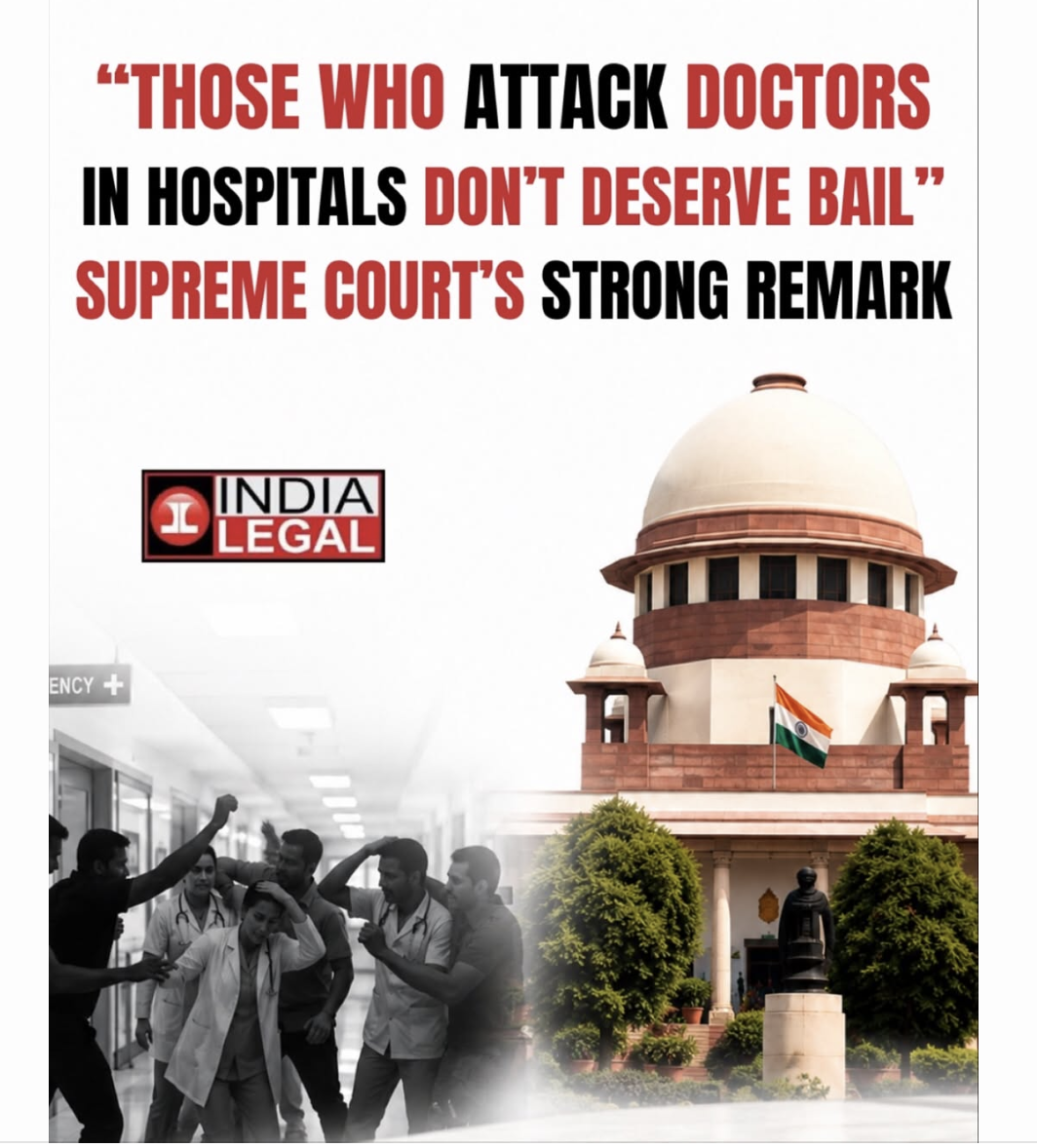
This Hindi clipping reports Supreme Court observations during bail proceedings concerning an alleged attack on hospital doctors and staff. A separate brief discusses the Palghar hospital incident.
The clipping is a newspaper report, not the court order. Its publication date is not visible.
Palghar hospital staff allegedly attacked over medical bills
Newspaper clipping — masthead not visible
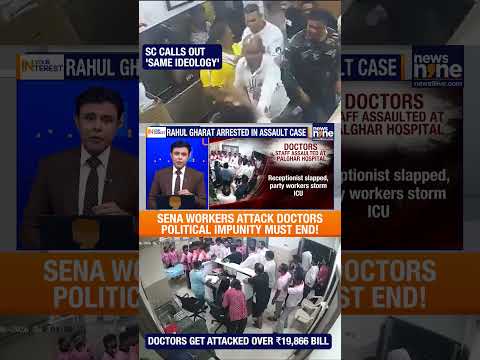
The supplied clipping reports that 17 people were booked after alleged assault, abuse and threats against hospital staff over treatment bills during Dahi Handi celebrations. It attributes the details to a police official.
The newspaper name and publication date are not visible in this crop. The linked report provides related coverage.
Social coverage of the hospital-assault bail proceedings
The Bar Bulletin — branding visible in graphic
The Bar Bulletin graphic reports Supreme Court remarks and a direction to Maharashtra to seek cancellation of a corporator’s bail in an alleged hospital-assault case.
This is a publisher-branded social graphic. Its publication date is not visible; the wording should be read in the context of the particular hearing.
This YFC News graphic discusses reported Supreme Court remarks about an alleged attack on doctors inside a hospital. Its strong headline is presented here as the publisher’s wording.
The original is labelled “AI image”; it is an illustration, not a photograph of the hearing. No publication date is visible.
Original images supplied to this website; added 9 September 2026. Publication dates are not visible in the images. WhatsApp file dates are not treated as newspaper publication dates. The repeated YFC graphic appears once.
Source labels describe the credits visible in each image. Related-report links provide context and do not establish where an unidentified crop was published. Allegations remain attributed to the reports. Court observations concern particular proceedings and do not establish a blanket rule about bail.
The YFC graphic carries an “AI image” label. It is presented as a social-news illustration. Images are reproduced as supplied, with readable summaries provided alongside them.
Follow public discussion without losing the source
News links and public posts reflect different kinds of material: reporting, commentary, association statements and individual reactions. Read the description and attribution before treating them alike. Compare a social post with the original report where possible, especially when it concerns an allegation.
What should be checked before forwarding a public post?
Check its date, location, original author and whether it describes a later development or an older event. Avoid adding names, motives or outcomes that the source does not establish.
IANS attributes this statement to Eknath Shinde in its Palghar coverage. The statement calls for legal remedies rather than taking the law into one’s own hands.
Short excerpts checked on 9 September 2026. Quotes stay in their original language; the comments belong to their authors. Inclusion does not imply membership of or endorsement of this website. Open the original post for the full context.
Public support for safe medical workplaces
These excerpts show how doctors and other public voices describe the need for safety and lawful action. Read the full post for the author’s reasoning and context. The collection supports discussion while keeping each statement attached to the person or publisher who made it.
Does appearing here mean the author endorses this project?
No. A sourced quotation is not evidence of membership, partnership or endorsement. When sharing an excerpt, preserve the attribution and avoid presenting it as a statement issued by this website.
Reports that the Bombay High Court requested the police chief’s presence with case papers after concerns about the investigation were raised by lawyers, including counsel for IMA.
PTI reports that IMA’s lawyer questioned the progress of the probe. The court directed the Palghar Superintendent of Police to attend with the case record.
Reports court scrutiny of the investigation and disciplinary action against seven party office-bearers. The report uses both “expelled” and “suspended” to describe that action.
Reports the court’s concern about recurring hospital attacks and the state’s challenge to bail. These were observations in particular proceedings, with a response sought from the accused.
Incident / context: September hearing concerning the July 2026 Dombivli incident
PTI reports that the court issued notice, allowed three weeks for a reply and listed the matter for 28 September. The report distinguishes the state’s challenge from the accused’s withdrawn appeal.
Incident / context: September hearing concerning the July 2026 Dombivli incident
Describes the hearing on the state’s bail challenge and the court’s concerns about repeated violence against doctors. The report gives procedural context for the widely shared remarks.
Incident / context: September hearing concerning the July 2026 Dombivli incident
Reports the Supreme Court’s comments while seeking a response to the state’s bail challenge. It also records the clarification that the Palghar and Thane incidents involved different accused.
Incident / context: September hearing concerning the July 2026 Dombivli incident
NDTV reports an alleged assault on Dr Yogendra Jaiswal while he was explaining a patient’s condition, and an FIR at Kolsewadi police station. This publisher video was published in August.
Related harassment and alleged wrongful confinement case. Report says the inquiry found no evidence of physical abuse; do not describe it as an established physical assault.
Incident / context: Alleged confinement 2026-08-05; death 2026-08-09
Dates above each headline are publisher publication or update dates. Incident dates and earlier case developments are shown separately. These are report counts, not counts of separate attacks; the collection includes publisher video reports. Last researched 9 Sep 2026. This is not a live news feed or an exhaustive record.
Headlines and summaries are paraphrased in English. The language label describes the original source. Allegations remain attributed to the linked reports; court observations are not presented as a general rule on bail. Some reports were available through indexed publisher text only.
RG Kar reports concern developments in a 2024 crime. Satara and Surat entries concern related harassment investigations. Pune and Badaun entries describe alleged assaults outside healthcare settings.
The curated collection includes reports on hospital assaults, professional responses and legal proceedings. Multiple articles may discuss the same event at different stages. Read the publication date and incident context together to understand whether a report describes an allegation, police action or a court development.
How can a team use news coverage constructively?
Choose one relevant issue for a staff discussion, identify a local preparedness question and assign a follow-up action. Avoid circulating disturbing imagery when a factual summary and source link will serve the purpose.
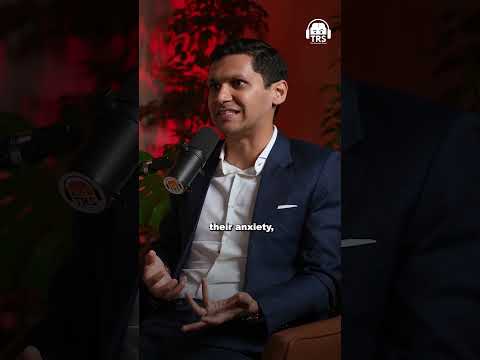
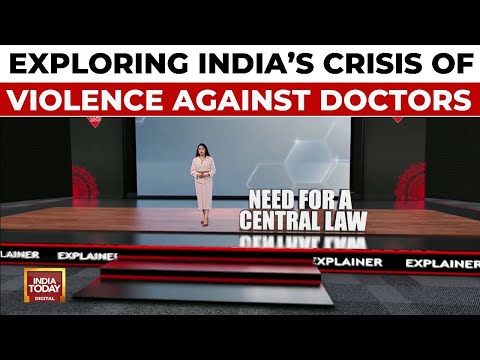
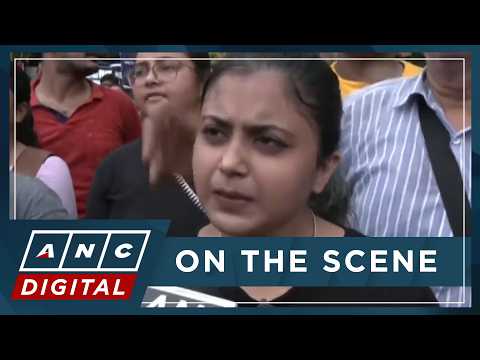
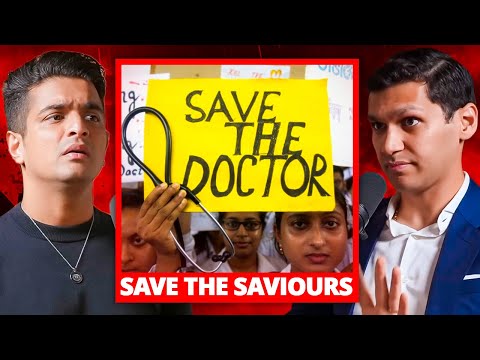
Explore publisher videos and public posts about doctor safety, legal developments and hospital preparedness. YouTube videos can play here; original publisher links are included throughout.
Short videos. Important conversations.
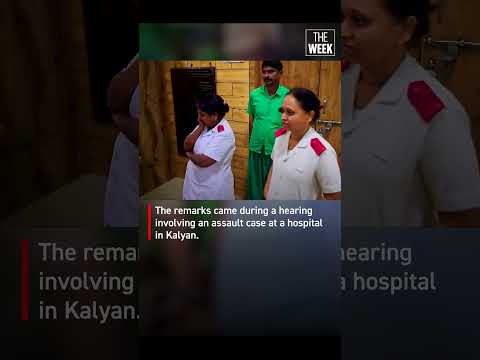
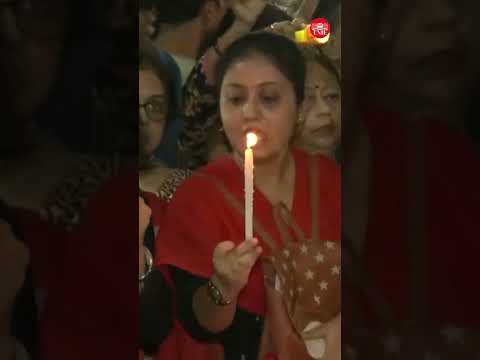
Watch the selected YouTube Shorts about violence against doctors. Swipe to browse on your phone. Tap a thumbnail to load its player, or open the original video.
Titles and channel credits checked 10 Sep 2026. These clips reflect their publishers’ reporting or commentary. Court observations need the context of the case discussed; read the legal guide. The original links remain available if YouTube restricts playback.
More reporting and discussion.
Explore longer reports and discussions about doctor safety and hospital security. Tap a thumbnail to load its player, or open the original video.
Titles and channel credits checked 10 Sep 2026. These clips reflect their publishers’ reporting or commentary. Court observations need the context of the case discussed; read the legal guide. The original links remain available if YouTube restricts playback.
Earlier video reports and X sources checked 9 September 2026. Earlier coverage is labelled. Video descriptions summarise publisher information; some linked reports contain footage of alleged assaults.
Compare video reporting with written coverage
Video can make a reported event easier to follow, while a written article may provide dates, documents and later developments. Use both where available. Thumbnails marked as illustrations are visual introductions and should not be described as footage of the reported incident.
What if a video’s headline sounds stronger than the report?
Read the publisher’s description and linked coverage before drawing a conclusion. For court matters, consult the legal guide and the relevant order or source rather than relying only on a short clip.
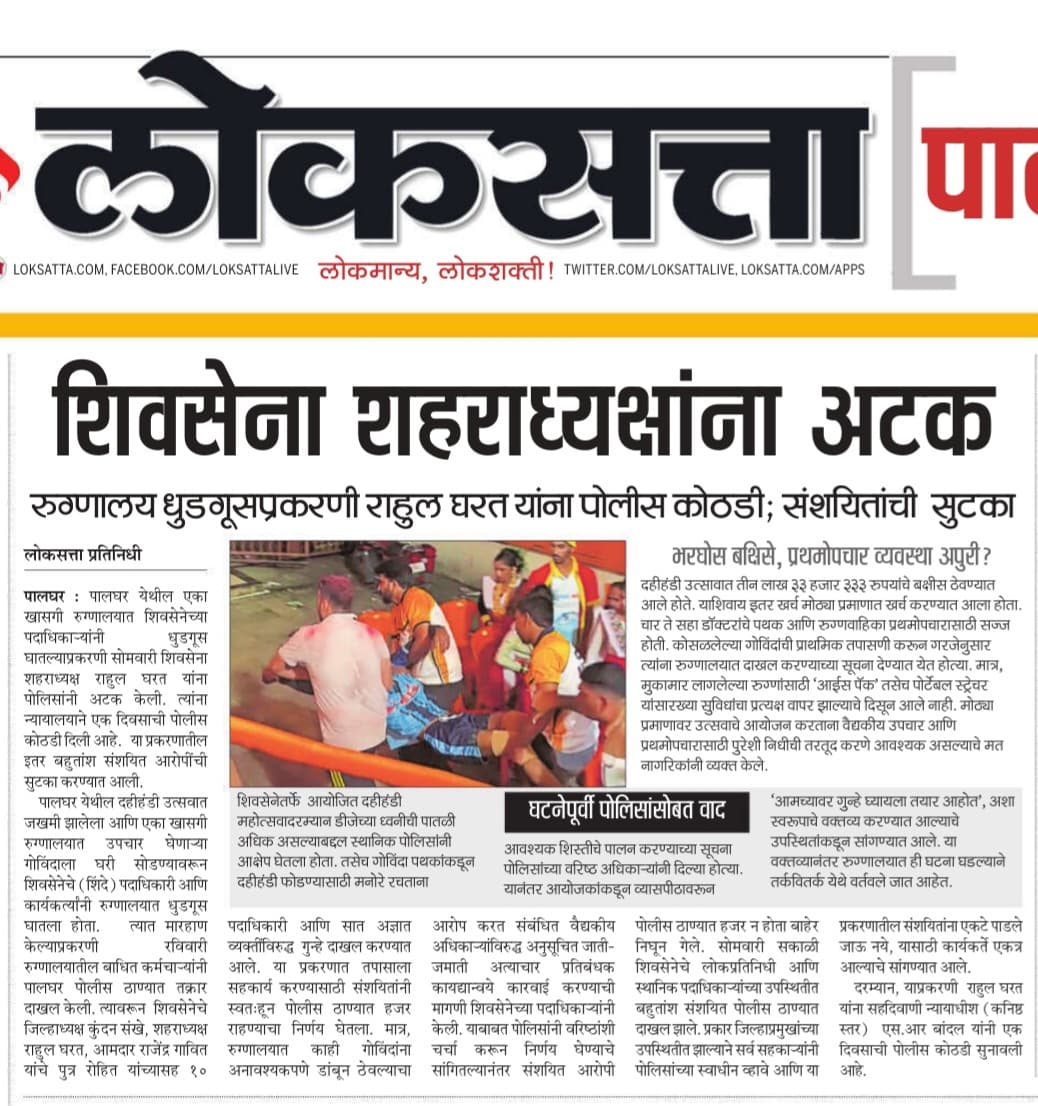
Rahul Gharat remanded in police custody over hospital ruckus; other suspects released
Loksatta correspondent, Palghar
Police on Monday arrested Shiv Sena city chief Rahul Gharat in connection with a ruckus allegedly created by party office-bearers at a private hospital in Palghar. A court remanded him in police custody for one day. Most of the other suspected accused in the case were released.
Shiv Sena (Shinde faction) office-bearers and workers allegedly created a disturbance at a private hospital in Palghar while seeking the discharge of Govinda participants who had been injured during a Dahi Handi celebration and were receiving treatment there. Following allegations that hospital staff had also been assaulted, the hospital's medical staff registered a complaint at Palghar police station on Sunday.
Cases were registered individually against 10 office-bearers, including Shiv Sena district chief Kundan Sankhe, city chief Rahul Gharat and MLA Rohit Gavit, as well as seven unidentified people. The suspects decided to appear voluntarily at the police station to cooperate with the investigation.
Shiv Sena office-bearers also demanded action against the medical officers under the Scheduled Castes and Scheduled Tribes (Prevention of Atrocities) Act, alleging that the hospital had unnecessarily detained some Govinda participants. After arguments with police, the accused left the police station late on Sunday night, saying they would decide on their course of action.
On Monday morning, most of the suspected accused appeared at the police station in the presence of Shiv Sena representatives and local office-bearers. In the presence of the Palghar MLA, police allowed the workers and suspects to leave. They were told to return the following morning and attend the inquiry one at a time.
Meanwhile, after Rahul Gharat was produced before the court, Civil Judge (Junior Division) S. R. Bandel ordered one day's police custody.
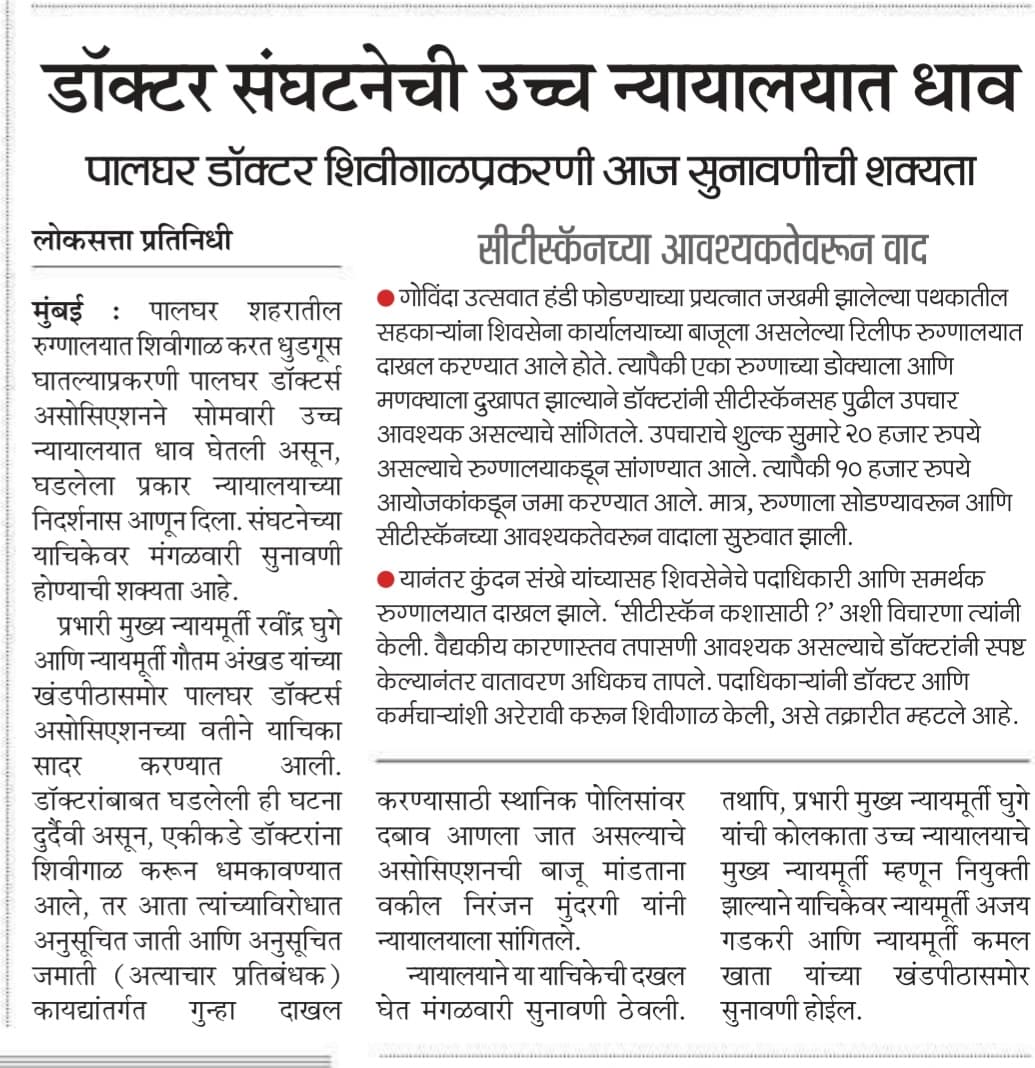
Hearing likely today in the case concerning verbal abuse of doctors in Palghar
Loksatta correspondent, Mumbai
The Palghar Doctors Association approached the High Court on Monday over an incident involving verbal abuse and a ruckus at a hospital in Palghar city, bringing the episode to the court's attention. The association's petition was likely to be heard on Tuesday.
The petition was presented on behalf of the Palghar Doctors Association before a bench of Acting Chief Justice Ravindra Ghuge and Justice Gautam Ankhad.
Advocate Niranjan Mundargi, appearing for the association, told the court that the incident involving the doctors was unfortunate. Doctors had first been abused and threatened, and pressure was now allegedly being put on local police to register a case against them under the Scheduled Castes and Scheduled Tribes (Prevention of Atrocities) Act.
The court took cognisance of the petition and scheduled a hearing for Tuesday. However, because Acting Chief Justice Ghuge had been appointed Chief Justice of the Calcutta High Court, the petition would be heard by a bench of Justice Gadkari and Justice Kamal Khata.
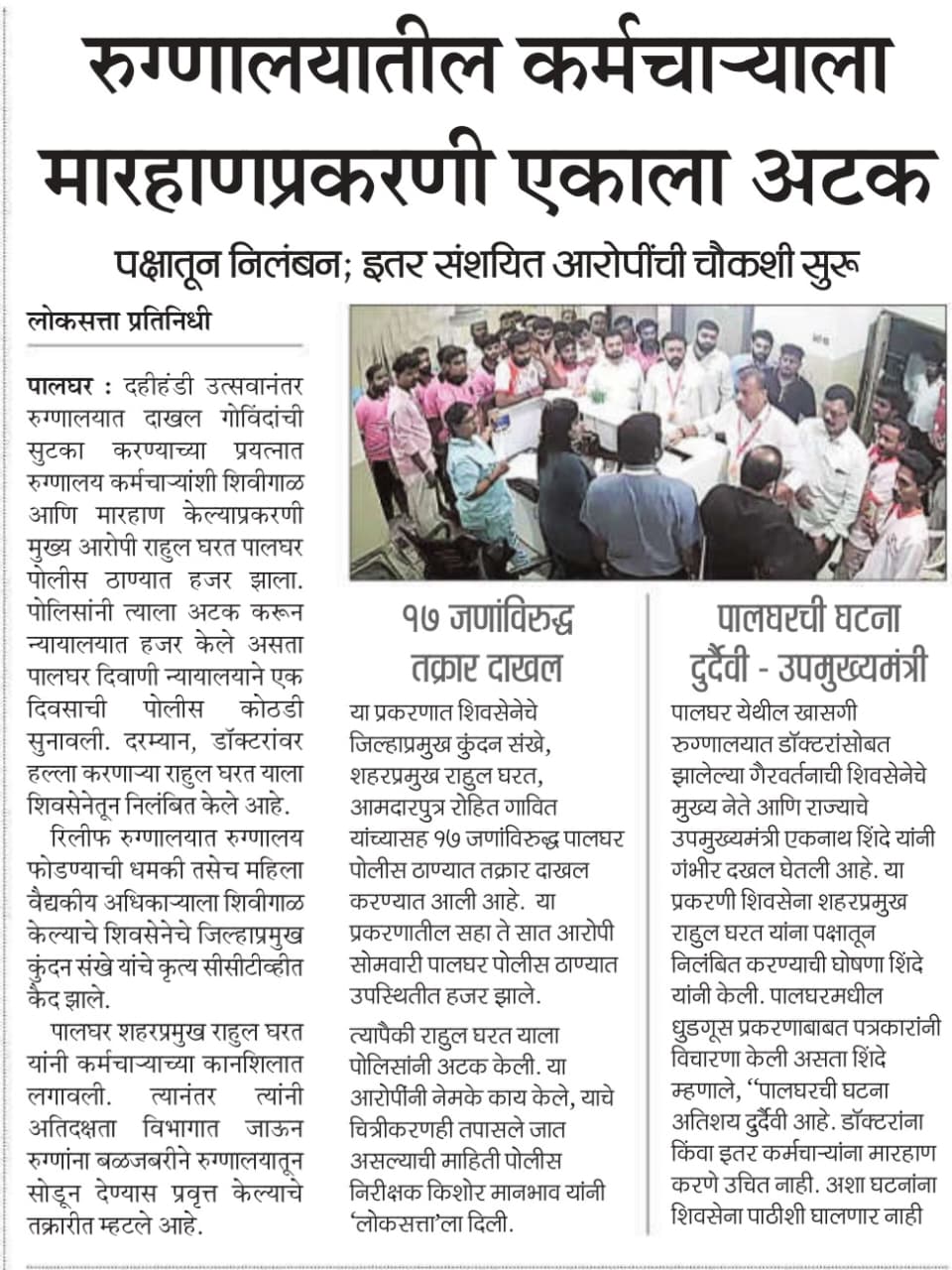
Suspension from the party; inquiry into other suspected accused continues
Loksatta correspondent, Palghar
Rahul Gharat, the main accused in a case involving alleged verbal abuse and assault of hospital staff while attempting to secure the discharge of Govinda participants admitted after a Dahi Handi celebration, appeared at Palghar police station. Police arrested him and produced him before the court, which remanded him in police custody for one day.
Meanwhile, Rahul Gharat, accused of attacking doctors, was suspended from Shiv Sena.
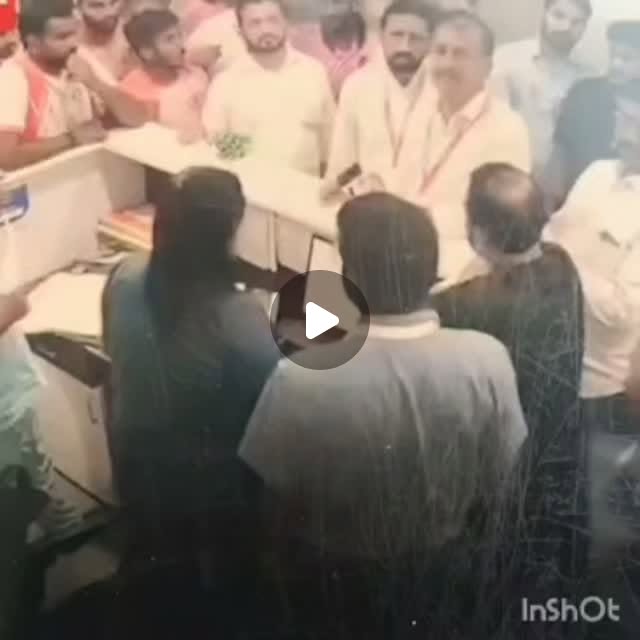
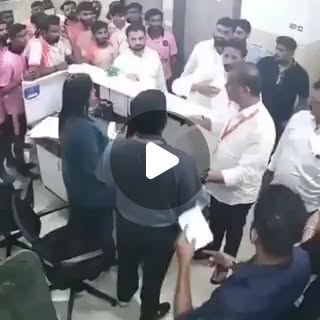
CCTV footage recorded Shiv Sena district chief Kundan Sankhe allegedly threatening to demolish Relief Hospital and verbally abusing a female medical officer.
The complaint stated that Palghar city chief Rahul Gharat slapped a hospital employee. It further alleged that he then entered the intensive care unit and urged that patients be forcibly discharged from the hospital.
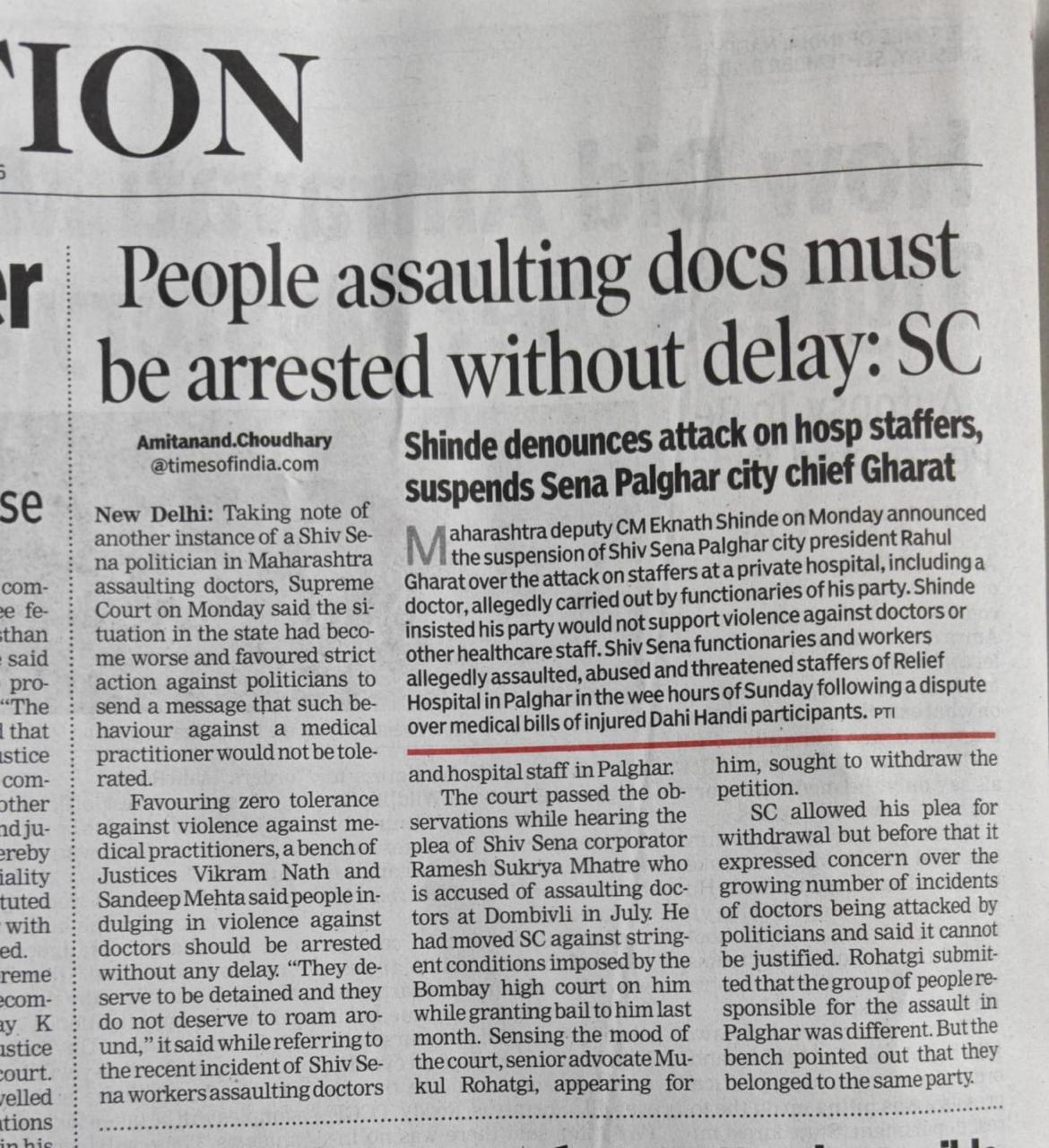
People assaulting docs must be arrested without delay: SC
English transcription of the supplied clipping
Amit Anand Choudhary, New Delhi
New Delhi: Taking note of another instance of a Shiv Sena politician in Maharashtra assaulting doctors, Supreme Court on Monday said the situation in the state had become worse and favoured strict action against politicians to send a message that such behaviour against a medical practitioner would not be tolerated.
Favouring zero tolerance against violence against medical practitioners, a bench of Justices Vikram Nath and Sandeep Mehta said people indulging in violence against doctors should be arrested without any delay. ‘They deserve to be detained and they do not deserve to roam around,’ it said while referring to the recent incident of Shiv Sena workers assaulting doctors and hospital staff in Palghar.
The court passed the observations while hearing the plea of Shiv Sena corporator Ramesh Surkya Mhatre who is accused of assaulting doctors at Dombivli in July. He had moved SC against stringent conditions imposed by the Bombay high court on him while granting bail to him last month. Sensing the mood of the court, senior advocate Mukul Rohatgi, appearing for him, sought to withdraw the petition.
SC allowed his plea for withdrawal but before that it expressed concern over the growing number of incidents of doctors being attacked by politicians and said it cannot be justified. Rohatgi submitted that the group of people responsible for the assault in Palghar was different. But the bench pointed out that they belonged to the same party.
Read the original clipping alongside its translation
Side-by-side presentation helps readers check names, wording and the distinction between a reporter’s account and a quoted statement. Enlarge the original when a detail matters. A translation makes the supplied material accessible; it does not independently verify every assertion in the report.
How should a clipping with no visible date be cited?
Identify the publication and describe it as a supplied clipping with its date unavailable. Do not turn relative words such as “today” into a guessed calendar date.
If the player is unavailable, use the YouTube link.
Use the Palghar report as background reading
The linked publisher report covers a specific hospital incident and reported police action. It should be read within its publication context, alongside later coverage where available. A news report about one incident does not establish the outcome of every related proceeding.
Is watching a report the same as reporting an incident?
No. Use Inform us to submit a factual account of a past incident for committee review. Use the appropriate emergency and police channels for immediate danger or an official complaint.
The three Marathi reports are translated from the supplied Loksatta clippings. The English report is transcribed from the supplied Times of India clipping. Publication dates are not visible in the clippings; references to “Monday”, “Tuesday” and “today” follow the original reporting. Statements and allegations remain attributed to their sources.
The YouTube report is linked to its publisher, Aaj Tak.
Sources, corrections and responsible sharing
This resource brings together research, government information, reporting and public commentary. Each has a different purpose. Check the date and source type, retain attribution and follow the original link for the full context. A later correction or order may change how older material should be understood.
How can a reader flag an error or outdated link?
Send an enquiry with the page address, the item concerned and a reliable supporting source. Avoid including private patient records or sensitive case documents in a general correction request.














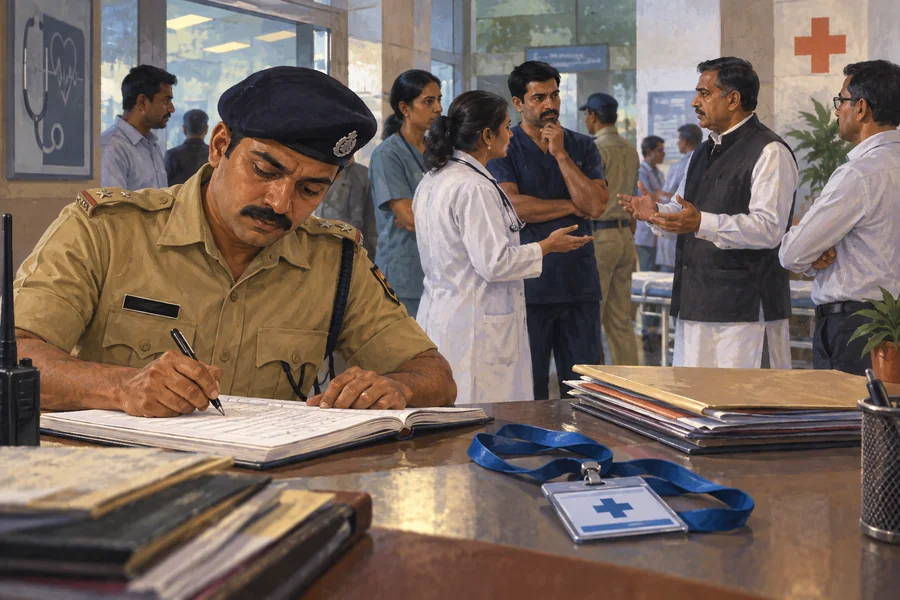
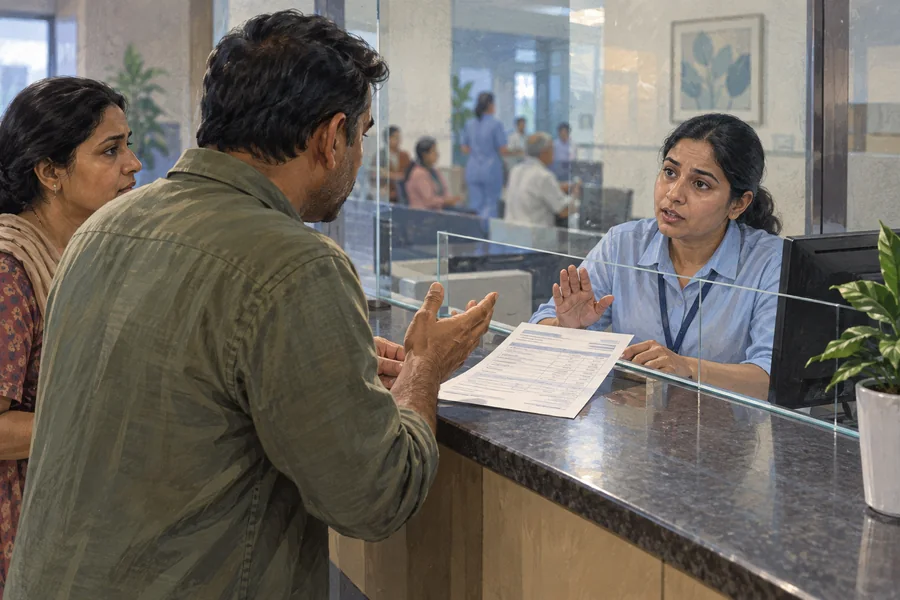
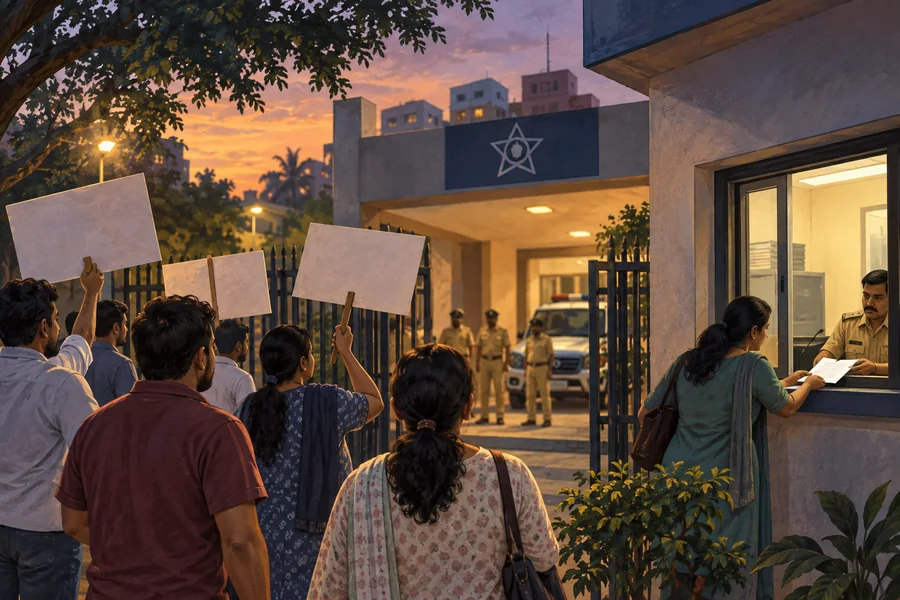
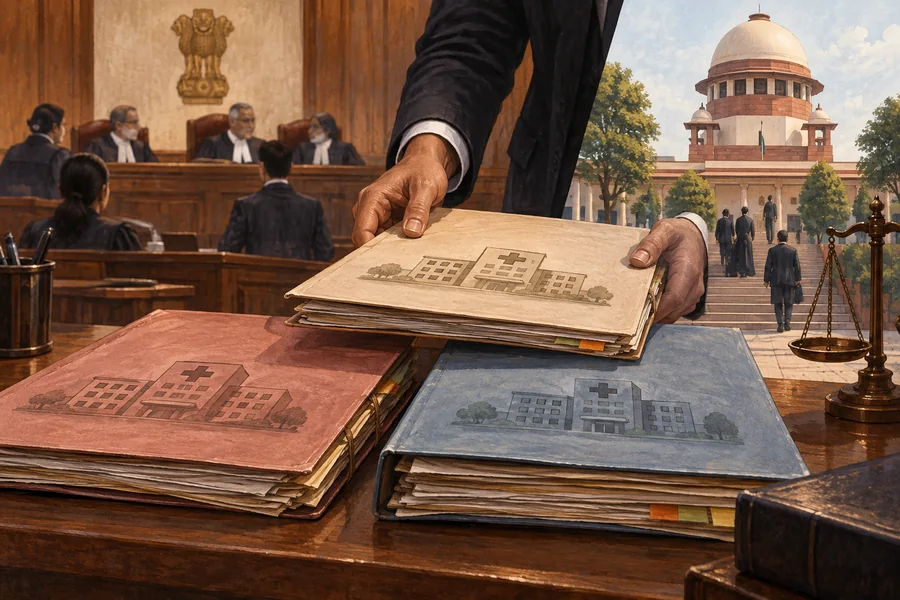
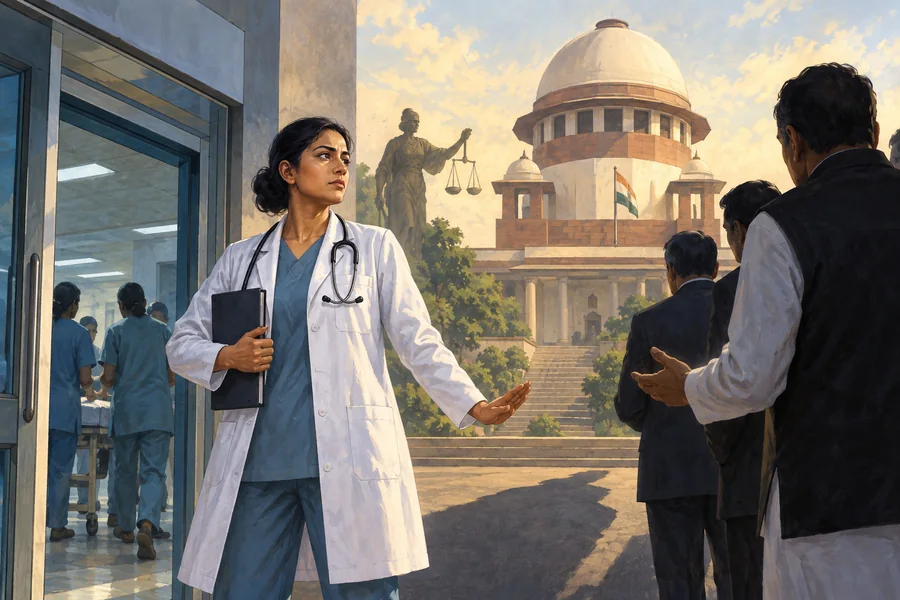
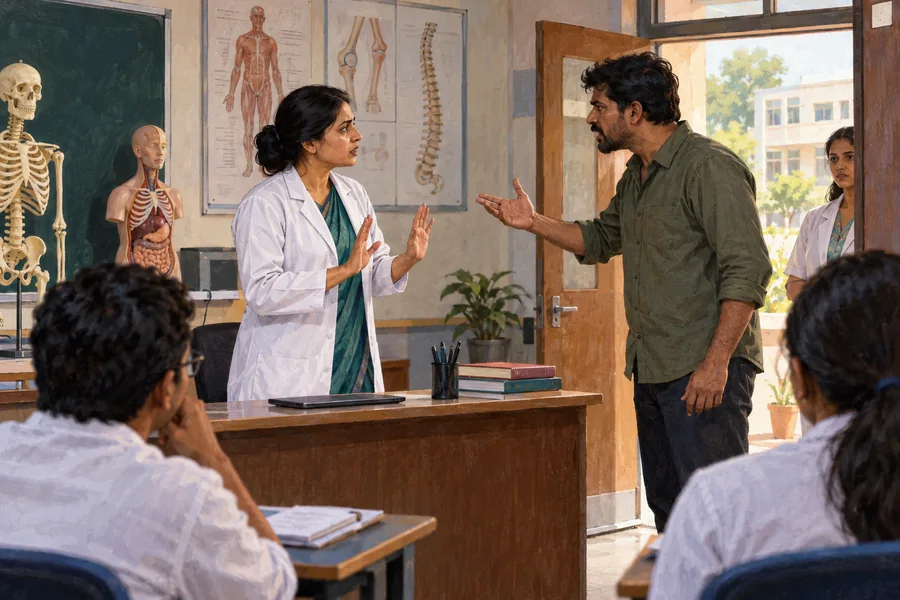
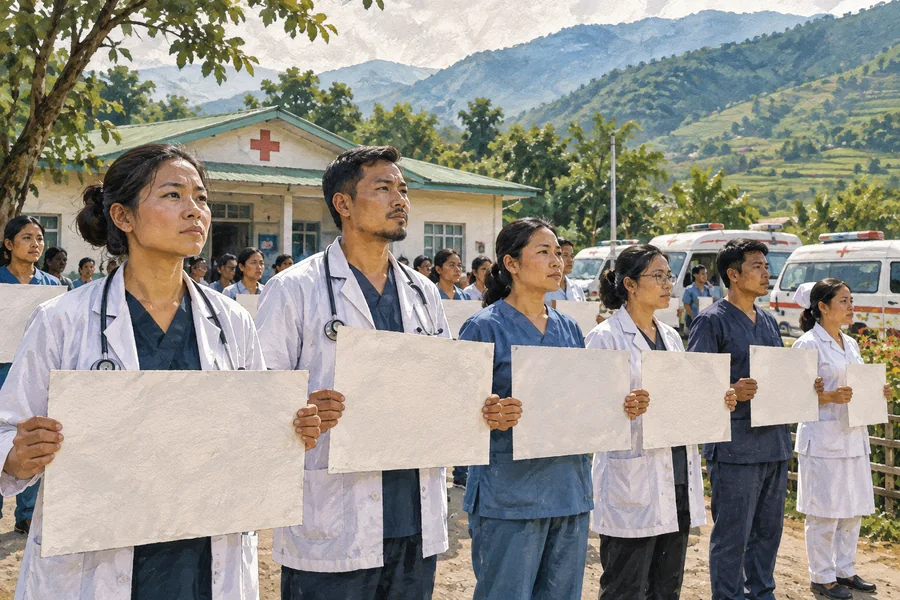
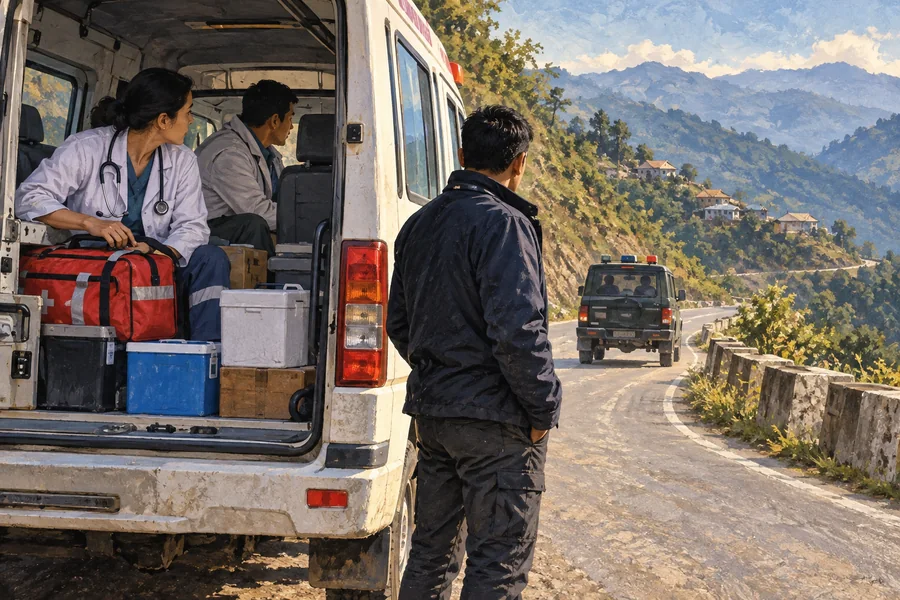
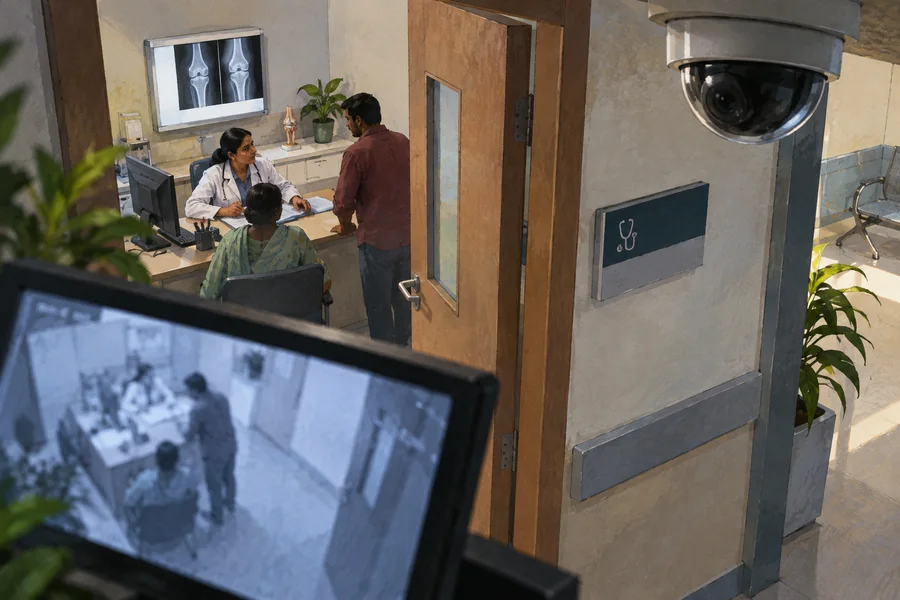
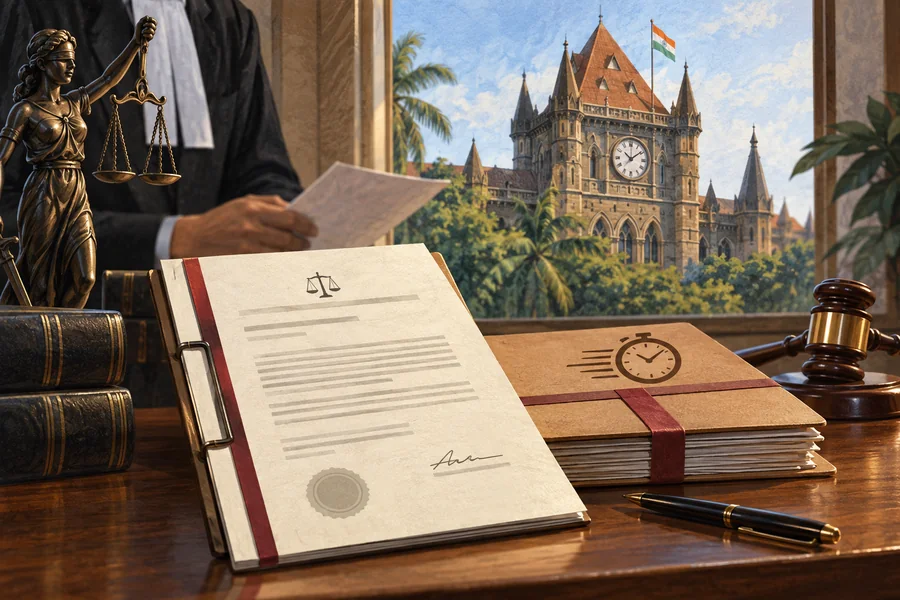
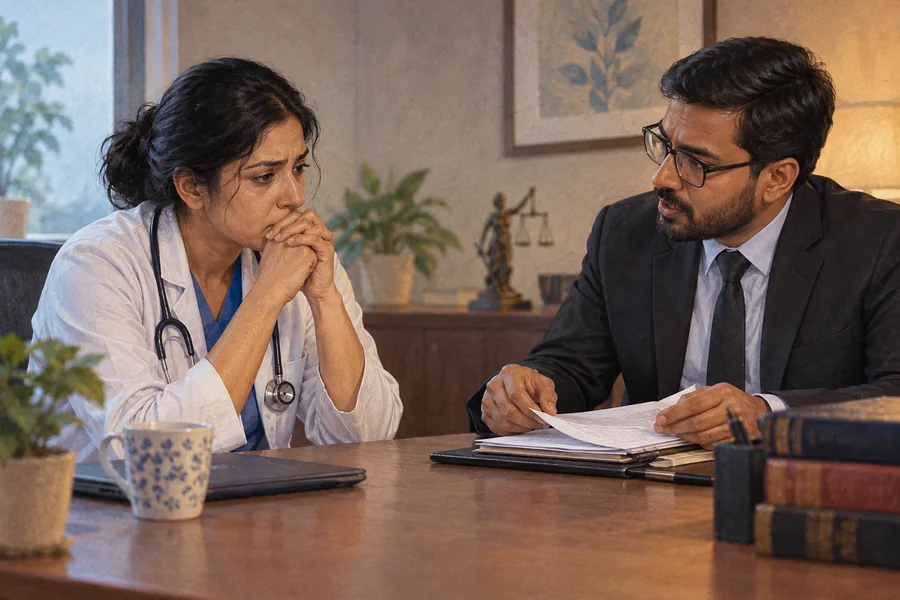
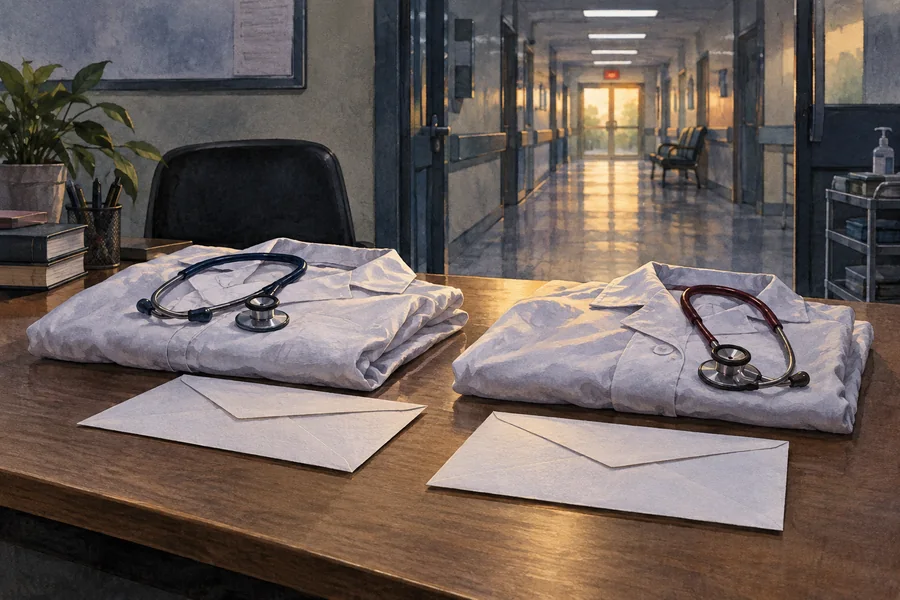
In print & on social media
Social news & newspaper clippings.
Original clippings and social graphics about violence against doctors, with English summaries and links to related reporting.
Open the social-news page ↗4 shared items
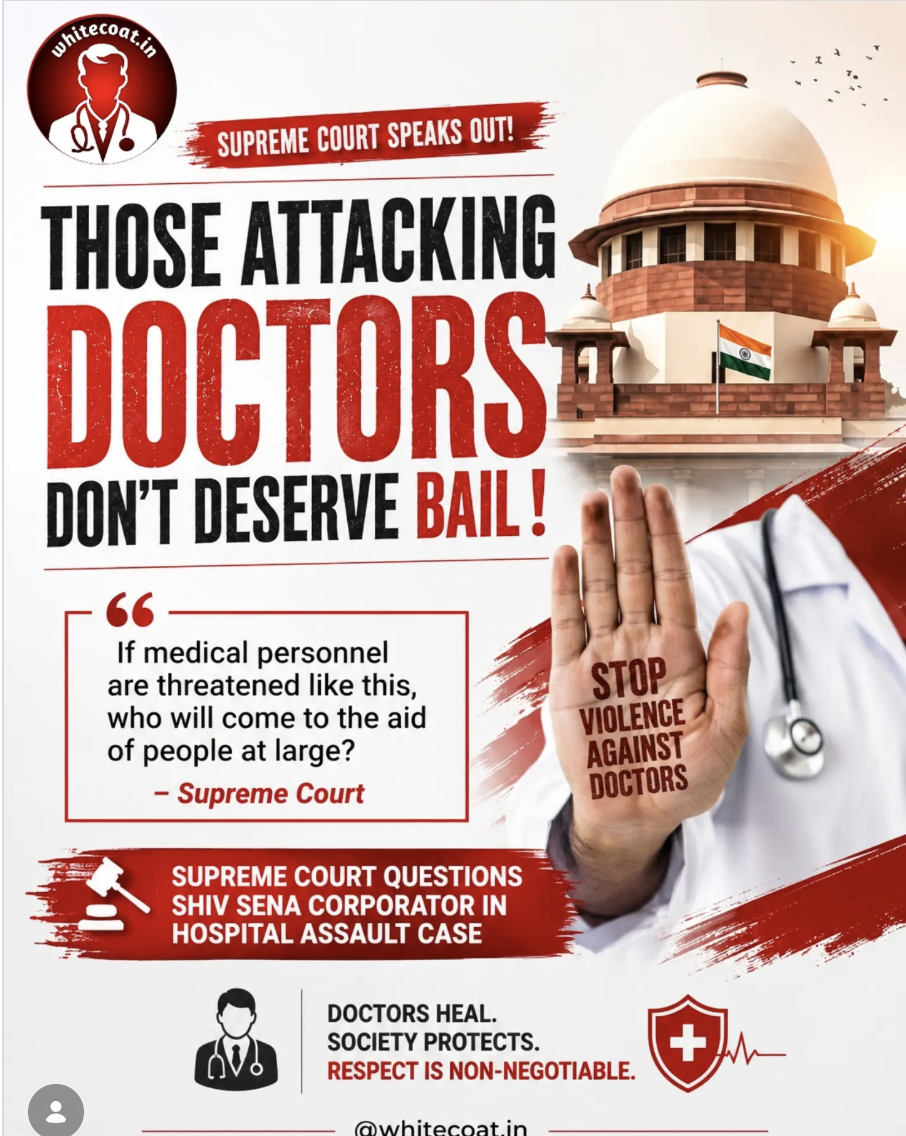
Court remarks on attacks against doctors
Navabharat News Network — credit visible in clipping
This Hindi clipping reports Supreme Court observations during bail proceedings concerning an alleged attack on hospital doctors and staff. A separate brief discusses the Palghar hospital incident.
The clipping is a newspaper report, not the court order. Its publication date is not visible.
Palghar hospital staff allegedly attacked over medical bills
Newspaper clipping — masthead not visible
The supplied clipping reports that 17 people were booked after alleged assault, abuse and threats against hospital staff over treatment bills during Dahi Handi celebrations. It attributes the details to a police official.
The newspaper name and publication date are not visible in this crop. The linked report provides related coverage.
Social coverage of the hospital-assault bail proceedings
The Bar Bulletin — branding visible in graphic
The Bar Bulletin graphic reports Supreme Court remarks and a direction to Maharashtra to seek cancellation of a corporator’s bail in an alleged hospital-assault case.
This is a publisher-branded social graphic. Its publication date is not visible; the wording should be read in the context of the particular hearing.
Marathi social graphic on reported court remarks
YFC News — branding visible in graphic
This YFC News graphic discusses reported Supreme Court remarks about an alleged attack on doctors inside a hospital. Its strong headline is presented here as the publisher’s wording.
The original is labelled “AI image”; it is an illustration, not a photograph of the hearing. No publication date is visible.
About these shared images
Original images supplied to this website; added 9 September 2026. Publication dates are not visible in the images. WhatsApp file dates are not treated as newspaper publication dates. The repeated YFC graphic appears once.
Source labels describe the credits visible in each image. Related-report links provide context and do not establish where an unidentified crop was published. Allegations remain attributed to the reports. Court observations concern particular proceedings and do not establish a blanket rule about bail.
The YFC graphic carries an “AI image” label. It is presented as a social-news illustration. Images are reproduced as supplied, with readable summaries provided alongside them.
For a correction or source attribution, email NagpurIMAsafety@hopehospital.com.
Follow public discussion without losing the source
News links and public posts reflect different kinds of material: reporting, commentary, association statements and individual reactions. Read the description and attribution before treating them alike. Compare a social post with the original report where possible, especially when it concerns an allegation.
What should be checked before forwarding a public post?
Check its date, location, original author and whether it describes a later development or an older event. Avoid adding names, motives or outcomes that the source does not establish.